

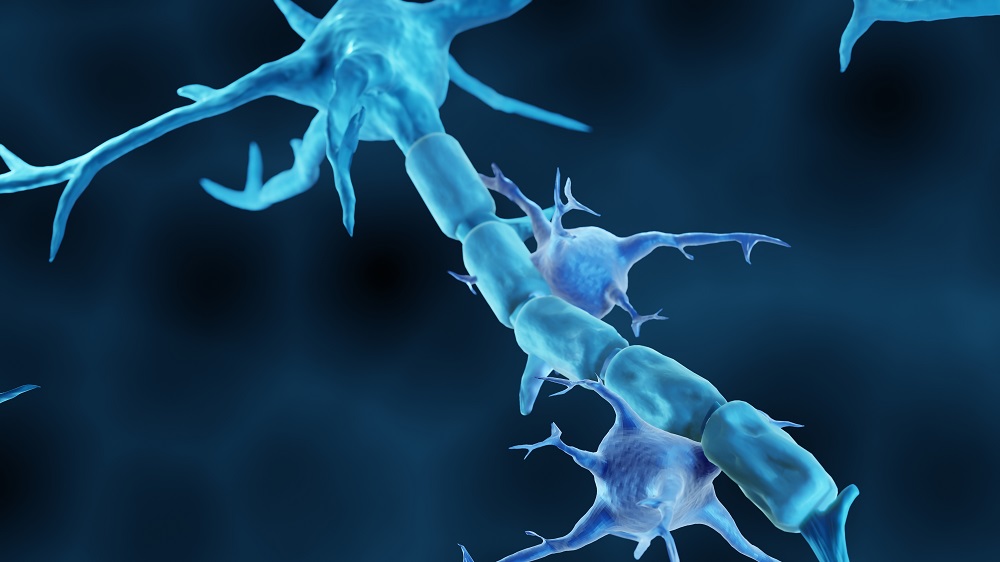
A recent study has revealed promising insights regarding the role of somatostatin (SST) in modulating Alzheimer's disease pathology in mice. This neuropeptide, primarily produced by inhibitory neurons, plays a crucial role in the communication between neurons and microglia, the brain's resident immune cells. By enhancing our understanding of this signaling pathway, researchers aim to illuminate new avenues for therapeutic interventions in Alzheimer's disease.
The Unusual Suspect
Alzheimer's disease is characterized by the dysregulation of multiple signaling pathways in the brain. Historically, research has concentrated on the principal hallmarks of Alzheimer's, namely amyloid β and tau protein accumulation. However, results in targeting these factors have been modest. Consequently, scientists are now investigating secondary molecular targets, such as SST, which might correlate with disease progression.
SST functions as a small signaling protein involved in regulating brain activity. It binds to somatostatin receptors (SSTR1-5), predominantly found on microglia. Hyperactivation of microglia is implicated in chronic inflammatory states, which have been closely linked to Alzheimer's disease and other forms of dementia [2]. Notably, SST levels are found to be significantly lower in Alzheimer's patients compared to healthy individuals [3]. Yet, the precise mechanism underlying SST's interaction with microglia had not been systematically explored until now.
Study Design
The research team at Daegu Gyeongbuk Institute of Science and Technology conducted their investigation, documented in the journal Brain, Behavior, and Immunity. They posited that SST plays a role in maintaining microglial homeostasis and that its deficiency contributes to microglial hyperactivation in Alzheimer's disease.
Methodology
The study's methodology included:
- Growing cultures of neurons, astrocytes, and microglia to determine SST receptor expression.
- Treating primary microglia with SST to evaluate effects on phagocytosis.
- Examining mice models, specifically 5xFAD, to understand SST's impact on cognitive functions and disease pathology.
Key Findings
| Assessment | Results | Significance |
|---|---|---|
| Microglial Phagocytosis | Boosted by SST treatment | Supports neuroprotective effects of SST |
| Pro-inflammatory Cytokines | Decrease in IL-12 and increase in TGF-β1 | Indicates a shift towards a less inflammatory environment |
| Cognitive Testing | Improved spatial memory in SST-overexpressing mice | Demonstrates potential cognitive benefits of SST modulation |
Implications and Future Directions
This research underscores the importance of SST in regulating microglial activity and potentially ameliorating Alzheimer's pathology. Given the established safety profiles of existing drugs targeting SST receptors, the possibility of repurposing these medications for Alzheimer's treatment emerges as a tangible prospect. The implications of such approaches could offer significant advancements in therapeutic options for a disease that currently has limited treatment modalities.
“This study demonstrates for the first time that somatostatin, a brain neurotransmitter, can directly regulate the state of immune cells to alleviate dementia pathology and improve memory function.” – Professor Jiwon Um
Conclusion
While this study represents a significant step forward, continuous research will be essential to validate these findings in human models and fully understand the therapeutic potential of SST modulation in Alzheimer's disease. Future investigations should focus on:
- Long-term effects of SST on cognitive decline in Alzheimer’s models.
- Understanding the diverse roles other neuropeptides might play in neuroinflammation.
- Exploring combination therapies that incorporate SST modulation with established Alzheimer’s medications.
References
[1] Jung, H., Hyun, G., Kim, S., Jeon, Y., Han, K. A., Lee, K. J., … & Um, J. W. (2026). . Brain, Behavior, and Immunity, 106563.
[2] Lue, L. F., Kuo, Y. M., Beach, T., & Walker, D. G. (2010). . Journal of Alzheimer's Disease, 41(2), 115-128.
[3] Davis, K. L., Davidson, M., Yang, R. K., Davis, B. M., Siever, L. J., Mohs, R. C., … & Targum, S. D. (1988). . Biological Psychiatry.
About the Author
Arkadi Mazin is a seasoned journalist and op-ed author with a passion for learning and exploration. His interests span from politics to science and philosophy. Having studied economics and international relations, he is particularly interested in the social aspects of longevity and life extension. He strongly believes that life extension is an achievable and noble goal that has yet to take its rightful place on the very top of our civilization’s agenda – a situation he is eager to change.
Support Independent Journalism
We are a non-profit foundation that relies on the generosity of individuals like you. Every contribution, no matter how small, supports independent journalism and helps sustain our future. Thank you for your support!





Discussion