

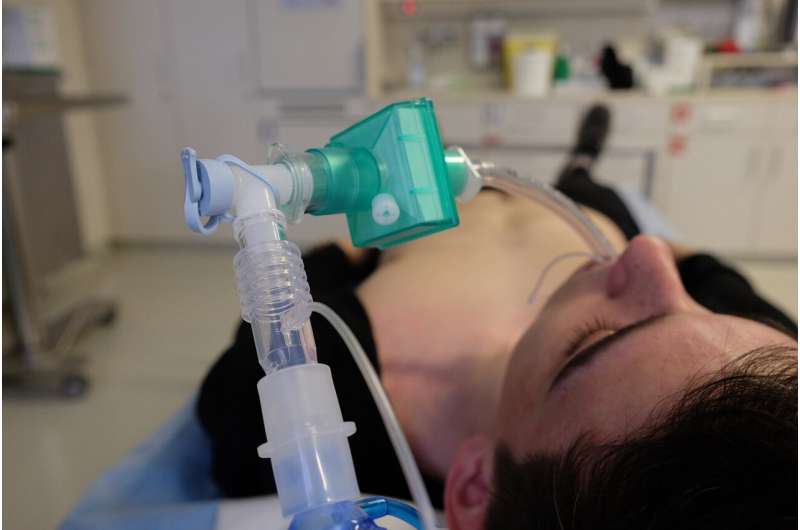
Endotracheal intubation is a critical procedure in emergency medicine, vital for maintaining a patient's airway and ensuring effective oxygen delivery. Traditional intubation techniques require highly trained professionals and optimal conditions, which are often not present in urgent care scenarios. A recent development in this field, a novel soft robotic intubation device, shows significant potential to enhance the accessibility and success of this life-saving procedure.
Overview of the Soft Robotic Device
Researchers at UC Santa Barbara, led by David Haggerty and Elliot Hawkes, have developed a non-electronic soft robotic device designed for rapid and autonomous intubation. This innovative device is aimed not only at experienced medical professionals but also at non-expert users, making it a versatile tool in emergency situations.
The findings of their research were published in the journal Science Translational Medicine, where they demonstrated that the device achieved a 100% success rate among trained users and a 96% success rate with non-expert prehospital medical providers. These significant results highlight the device's potential in saving lives during critical moments.
Addressing the Challenges of Traditional Intubation
Intubation techniques have long depended on the skill and anatomical knowledge of the rescuer. The conventional process necessitates that the rescuer visualize the trachea and maneuver a rigid tube through the complex airway structure. The numerous challenges inherent to prehospital settings—such as limited visibility, position difficulties, and patient injuries—further complicate this crucial procedure.
Why a Soft Robotic Approach?
One of the primary barriers to successful intubation is the body's anatomy itself. The epiglottis, a key structure that protects the trachea, often obstructs the intubation pathway. Traditional tools, which are stiff and require significant manual manipulation, can be detrimental, causing injury to surrounding tissues. The introduction of a soft robotic device represents a paradigm shift:
- Minimized Tissue Injury: The soft, growing tube design reduces friction and injury risks by adapting to the anatomical environment.
- Ease of Use: Minimal training—only five minutes—is needed for non-experts to achieve an impressive 87% success rate on first attempts.
- Speed: The average procedure duration is about 21 seconds, significantly faster than conventional methods.
Effectiveness of the New Device
| User Type | Success Rate | Procedure Duration (seconds) |
|---|---|---|
| Expert Users | 100% | Seconds |
| Non-Expert Users | 96% | 21 |
| Traditional Intubation (Video Laryngoscope) | Varies | 44 |
Next Steps and Potential Impact
Following their promising initial results, the researchers are now preparing for clinical trials to obtain Food and Drug Administration (FDA) approval. This step is crucial to ensure the device's efficacy and safety in real-world medical scenarios.
Expected benefits from this innovative device extend well beyond emergency intubation cases in hospitals. Its versatility could see applications in military medicine, as well as in areas with limited access to healthcare services, thereby potentially saving countless lives worldwide.
“Our device could democratize access to life-saving intubation, allowing even those without specialized training to perform it successfully,” stated Haggerty, emphasizing the device's potential impact.
Conclusion
In summary, the development of a soft robotic intubation device promises to address one of the most significant challenges in emergency airway management. By reducing the reliance on expert knowledge and the need for perfect conditions, this device could significantly improve patient outcomes and expand access to critical care. As the research progresses towards clinical application, its implications for emergency medicine, military care, and underserved populations remain promising.
Further Reading
For more information, refer to the original research by David Haggerty et al., titled A soft robotic device for rapid and self-guided intubation in Science Translational Medicine (2025).
Disclaimer: This document is subject to copyright. Apart from any fair dealing for the purpose of private study or research, no part may be reproduced without the written permission of the content provider.









Discussion