

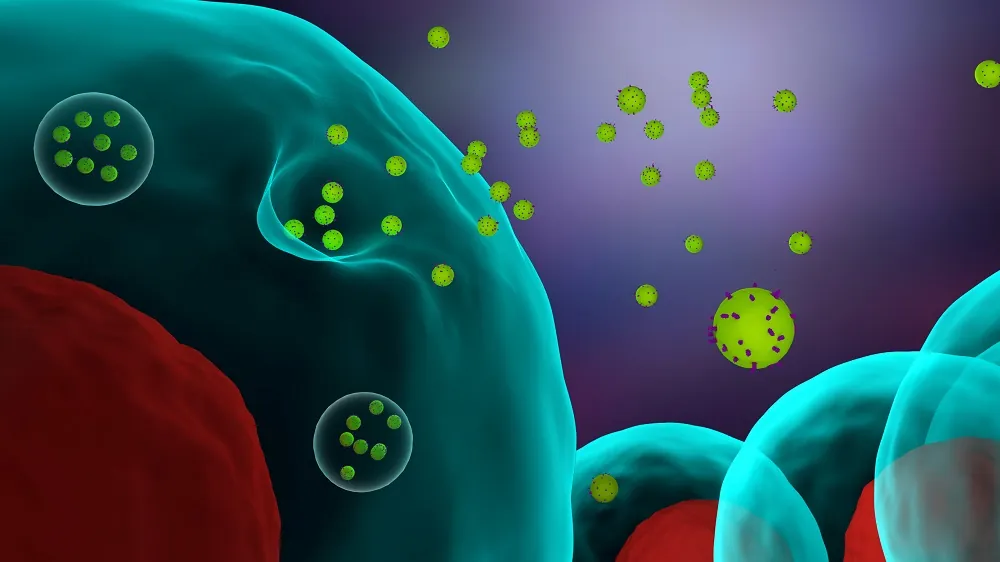
A recent study published on August 21, 2025, in Metabolism Clinical & Experimental has identified a pivotal factor involved in cellular senescence – an isoform of HMGB1 known as ReHMGB1. This factor not only drives the process of cellular senescence but is also secreted by senescent cells, leading researchers to propose potential therapeutic interventions that target this specific isoform.
Introduction to HMGB1
HMGB1 (High Mobility Group Box 1) is recognized as an alarmin protein that is released in response to cellular damage, functioning as a damage-associated molecular pattern (DAMP). It plays a dual role by regulating gene expression within the nuclear compartment while also prompting inflammatory responses outside the cell when secreted. This complex behavior positions HMGB1 as a crucial player in various pathological conditions, including the aging process.
The Role of ReHMGB1 in Senescence
The study reveals that ReHMGB1 specifically drives senescence in cellular models. Using WI-38 lung fibroblasts, which are widely utilized in senescence studies, researchers demonstrated that these cells exposed to senescent cell-derived media showed notable changes when treated with an anti-HMGB1 antibody. Key findings from their investigations include:
- Increased cellular proliferation: The anti-HMGB1 treated group exhibited significantly higher proliferation rates compared to control groups.
- Reduced senescence markers: Lower levels of biomarkers such as SA-β-gal, p21, and p53 were observed.
- Decreased SASP expression: The pro-inflammatory cytokine profile was normalized in the antibody-treated group.
This reduction in senescence symptoms suggests that targeting HMGB1 may limit its ability to propagate senescence in neighboring cells.
Distinct Effects of HMGB1 Isoforms
Further experiments differentiated the effects of various HMGB1 isoforms, particularly ReHMGB1 and OxHMGB1. The researchers found:
- ReHMGB1: Induces pronounced senescence marked by an upregulation of senescence-related pathways.
- OxHMGB1: Did not produce any significant changes in senescence-associated biomarkers.
These findings underscore the specificity of ReHMGB1 as a mediator of senescence, and suggest that its signaling pathways, particularly the RAGE–NF-κB–JAK/STAT axis, could be clinical targets for interventions.
Impacts Observed in Animal Models
The implications of these findings extended to in vivo studies with mice, where older mice exhibited significantly higher circulating levels of ReHMGB1 compared to younger cohorts. Key findings from these studies included:
| Mouse Age | Circulating ReHMGB1 Levels | Senescence Markers |
|---|---|---|
| 3 months | Low levels | Baseline |
| 24 months | High levels | Increased markers |
Administration of ReHMGB1 in younger mice led to an increase in inflammatory markers and senescence-related proteins, supporting the role of ReHMGB1 in the aging process.
Targeting ReHMGB1 for Health Benefits
To evaluate therapeutic potential, the researchers administered an anti-HMGB1 antibody to older mice just prior to inducing muscle injury. Observations indicated improvements in:
- Reduction of senescence markers
- Enhanced grip strength
- Improved motor performance in rotarod and treadmill tests.
These results illustrate a promising avenue for developing strategies to mitigate age-related muscle degeneration and other senescence-related diseases.
Conclusions and Future Directions
The findings of this study highlight the importance of ReHMGB1 in driving cellular senescence and its potential as a therapeutic target. Researchers suggest that further investigations into the qualitative and quantitative aspects of DAMPs like HMGB1 could lead to novel therapies aimed at limiting senescence spread and its detrimental effects on health. Dr. Sharma noted, “We are only beginning to understand the consequences of DAMPs in driving aging and inflammation; this presents attack vectors for novel, more selective therapeutic strategies.”
References
- Sofiadis, K., et al. (2021). HMGB1 coordinates SASP-related chromatin folding and RNA homeostasis on the path to senescence. Molecular systems biology, 17(6), e9760.
- Davalos, A. R., et al. (2013). p53-dependent release of Alarmin HMGB1 is a central mediator of senescent phenotypes. Journal of Cell Biology, 201(4), 613-629.
- Venereau, E., et al. (2012). Mutually exclusive redox forms of HMGB1 promote cell recruitment or proinflammatory cytokine release. Journal of Experimental Medicine, 209(9), 1519-1528.
- Kwak, M. S., et al. (2020). Immunological significance of HMGB1 post-translational modification and redox biology. Frontiers in immunology, 11, 1189.
- Kim, S. Y., et al. (2018). High-mobility group box 1-induced complement activation causes sterile inflammation. Frontiers in Immunology, 9, 705.
- Gacaferi, H., et al. (2020). The potential roles of high mobility group box 1 (HMGB1) in musculoskeletal disease: A systematic review. Translational Sports Medicine, 3(6), 536-564.
We would like to ask you a small favor. We are a non-profit foundation, and unlike some other organizations, we have no shareholders and no products to sell you. All our news and educational content is free for everyone to read, but it does mean that we rely on the help of people like you. Every contribution, no matter if it’s big or small, supports independent journalism and sustains our future.









Discussion