

Organ-Specific Aging Analysis Reveals Disease Connections
A youthful brain and immune system are key to longevity.
By Anna, July 23, 2025
A recent study explored the differences in the speed of organ aging. The researchers have built a foundation for understanding organ-specific aging.
Not All Organs Age Equally
Since each organ in the human body is different, the way they age also differs, with some ceasing to function properly early in life. Monitoring organ health and developing interventions to improve individual organs may be a viable approach to extend healthspan and lifespan.
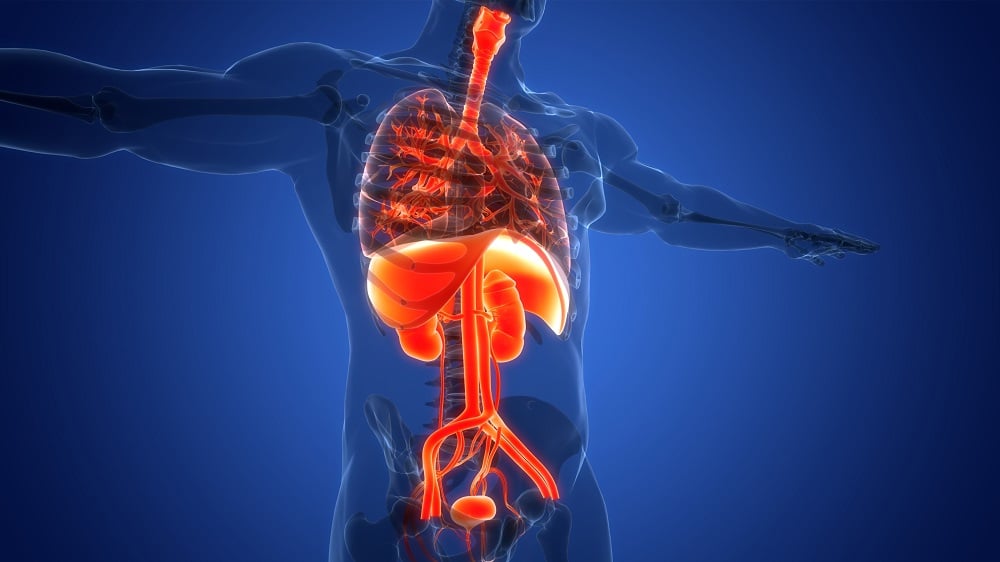
In this study, the researchers estimated the biological age of 11 organs: adipose tissue, artery, brain, heart, immune tissue, intestine, kidney, liver, lung, muscle, and pancreas. They used data from the UK Biobank, analyzing almost 3,000 proteins found in the plasma of over 44,000 people between the ages of 40 and 70 years.
First, they defined which plasma proteins were likely to be derived from a specific organ. Based on this data, they trained models to predict participants’ biological age for each organ separately. Their results suggested organ-specific differences in biological age that were only weakly correlated with each other, implying that organs age at different rates.
Connections Between Organ Aging and Disease
Organ age estimates allowed the researchers to predict future diseases in specific organs, including:
- Heart Aging: Strong associations with atrial fibrillation (irregular and rapid heart rhythms) and heart failure.
- Pancreatic Aging: Correlated with chronic kidney disease.
- Brain Aging: Linked to a higher risk of Alzheimer’s disease.
- Lung Aging: Associated with chronic obstructive pulmonary disease (COPD).
“We’ve developed a blood-based indicator of the age of your organs,” said Tony Wyss-Coray, PhD, professor of neurology and neurological sciences and director of the Knight Initiative for Brain Resilience. “With this indicator, we can assess the age of an organ today and predict the odds of your getting a disease associated with that organ 10 years later.”
An Extremely Young Brain is Protective Against Dementia
Since the organs didn’t age at the same speed, the researchers turned to look at ‘extreme organ agers’ who had one or more organs that aged much faster, along with another group of people who had extremely youthful organs. Extreme agers of 2 to 4 organs had a significantly elevated risk for every disease examined by the researchers. Conversely, individuals with between 2 and 4 extremely youthful organs were protected from many diseases.
The researchers evaluated the speed of brain aging and its association with Alzheimer’s. They noted that extreme brain aging led to a 3.1-fold increase in the risk of Alzheimer’s disease. In contrast, an extremely young brain reduced the risk by 74%, independent of age, sex, APOE4 (a strong genetic risk factor for Alzheimer’s), and APOE2 (a genetic variant linked to lower Alzheimer’s risk).
The Brain as a Central Lifespan Regulator
The researchers found a link between organ biological age and mortality risk, with brain aging having the most potent predictive properties. An aged single organ was associated with a 1.5- to 3-fold increased risk of death, with having more aged organs leading to an even higher risk. Here are the associated mortality risks:
| Number of Aged Organs | Increased Risk of Death |
|---|---|
| 2-4 | 2.3-fold |
| 5-7 | 4.5-fold |
| 8+ | 8.3-fold |
Surprisingly, youthful organs were not protective regarding mortality risk. The researchers suggested that the sample size may have been too small to see statistically significant differences.
A significant reduction in mortality risk was observed only in participants with youthful brains and immune systems due to the preservation of the brain extracellular matrix from chronic inflammation factors.
Lifestyle Matters for Organ Aging
The researchers tested 18 lifestyle factors, including diet, alcohol, smoking, exercise, and insomnia, alongside socioeconomic factors such as education. Notably, they found associations between age acceleration and factors like:
- Smoking
- Alcohol intake
- Processed meat consumption
- The Townsend Deprivation Index
- Insomnia
Conversely, youthful organs were associated with vigorous exercise, consumption of oily fish and poultry, and higher levels of education. Furthermore, specific drugs like Premarin, ibuprofen, and multivitamins were significantly linked with organ youth.
The researchers noted an interesting association regarding the timing of menopause. For the small sample of women they analyzed, earlier menopause correlated with accelerated aging, whereas estrogen treatment was associated with healthier profiles in at least three organs.
Future Directions: Preventing Organ-Specific Diseases
The researchers aim to expand this research by defining the sequence of organ aging and exploring possible sex-specific differences revealed in the data: men had older kidneys, immune systems, and intestines, whereas women exhibited older adipose tissue, arteries, and hearts.
These findings could lead to novel organ-specific medical interventions to improve healthspan and longevity. “This approach could lead to human experiments testing new longevity interventions for their effects on the biological ages of individual organs,” Wyss-Coray remarked.
Literature Cited
[1] Oh, H. S., Le Guen, Y., Rappoport, N., Urey, D. Y., Farinas, A., Rutledge, J., Channappa, D., Wagner, A. D., Mormino, E., Brunet, A., Greicius, M. D., & Wyss-Coray, T. (2025). Plasma proteomics links brain and immune system aging with healthspan and longevity. Nature Medicine, 10.1038/s41591-025-03798-1. Advance online publication.
We respect your privacy. You can unsubscribe at any time.
If you would like to support our work, please consider a donation. **We are a non-profit foundation**, and rely on contributions to keep our educational content accessible to all.









Discussion