

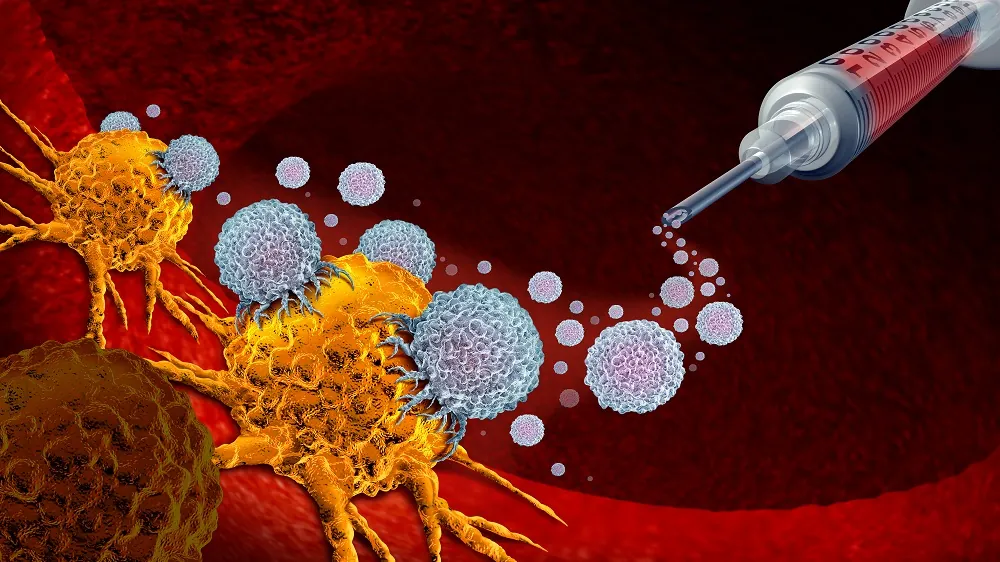
New Study Could Pave the Way for Better Cancer Vaccines
On June 10, 2025, groundbreaking research was published that highlights the potential for improved cancer vaccines through innovative approaches to identifying therapeutic targets. Scientists have determined that previously overlooked antigens could lead to more effective treatments, transforming the landscape of cancer immunotherapy.
The Genesis of Cancer
Cancer originates from a series of mutations that instigate uncontrolled cellular activity, resulting in excessive cell proliferation. Typically, cancerous cells display aberrant peptides on their surfaces, which are vital for immune detection and targeting. This functionality is predominantly facilitated by major histocompatibility complex (MHC) class I proteins, distinct from MHC class II proteins that provide immunity against exogenous pathogens such as bacteria and viruses.
The Challenge of Targeting Mutated Tumor-Specific Antigens
Targeting these tumor-specific antigen mutations (mTSAs) has emerged as a promising strategy in the development of anti-cancer vaccines. These vaccines are designed to activate the immune system against cells that express specific mTSAs. However, due to the fact that mTSAs are often unique to individual tumors, creating effective vaccines becomes both complicated and costly. In addition, many existing therapies targeting mTSAs frequently fail to yield the expected immune response.
“The acceleration of biological aging resulting from these treatments necessitates the development of new approaches that mitigate long-term harm while preserving the lifesaving benefits.” – Dr. John Smith, Lead Researcher
Moving Beyond Mutations: A Revolutionary Study
A pivotal study from the Institute for Research in Immunology and Cancer (IRIC) at the University of Montreal, published in Nature Cancer, utilized advanced multi-omic approaches to catalogue tumor antigens present in 505 samples of melanoma and 90 samples of lung cancer.
One of the striking revelations from this analysis was that a mere 1% of the identified tumor antigens originated from mutations. The remaining 99% were sourced from non-mutated areas of the genome, particularly sequences that are typically inactive or minimally expressed in non-cancerous tissues.
Classification of Antigens
The antigens found in cancer cells were categorized into three primary groups:
- Aberrantly Expressed Tumor-Specific Antigens (aeTSAs): Peptides derived from normally silent regions of the genome, whose expression is heightened in cancer.
- Tumor-Associated Antigens (TAAs): Proteins that, while overproduced in cancer, can also be found in some healthy tissues.
- Lineage-Specific Antigens (LSAs): Proteins characteristic of the specific tissue from which the cancer originates, such as markers found in melanoma.
Significance of Aberrantly Expressed Antigens
Researchers established that mutated antigens are infrequent because many mutations do not result in the transcription of RNA, leaving no protein for the immune system to target. Also, mutations that are transcribed may occur in regions that do not create effective peptide presentations for immune recognition. In contrast, many aeTSAs create proteins that are expressed on tumor surfaces, capable of triggering immune responses. Healthy donor-derived immune cells demonstrated the ability to recognize and destroy cancer cells exhibiting these aeTSAs, indicating their potential as significant targets for immunotherapy.
Favorably, aeTSAs exhibit a shared presence across multiple patients, distinguishing them from mutated antigens, which are often personalized and unique. This quality positions aeTSAs for the development of generalized, off-the-shelf vaccines or T cell therapies, providing a compelling avenue for future treatment options.
Comments from Experts
Dr. Anna Barkovskaya, a researcher at Lifespan Research Institute who was not involved in this study, remarked, “This is an intriguing study that explores a novel approach to cancer immunotherapy. Previous developments primarily focused on identifying new mutated tumor-specific antigens, which are patient-specific and rare.”
Complementary Research Findings
A similar study published in Science reinforces these findings, demonstrating that the majority of antigens presented in human pancreatic cancer arise not from mutations but from non-canonical sources, including long non-coding RNAs and untranslated regions (UTRs).
| Antigen Type | Description |
|---|---|
| Aberrantly Expressed Tumor-Specific Antigens (aeTSAs) | Peptides from normally silent genomic regions activated in cancer. |
| Tumor-Associated Antigens (TAAs) | Proteins overproduced in cancer, present in some normal tissues. |
| Lineage-Specific Antigens (LSAs) | Proteins typical of the tissue where the cancer originates. |
The Future of Cancer Vaccines
The implications of these studies are profound: they suggest that while mutations serve as initial drivers of cancer, the proteins involved may not always be prominent or effective as targets for the immune system later in tumor development. Targets such as aeTSAs, which are not derived from the original mutations but rather essential for sustaining cancerous characteristics, may present a more fruitful avenue for immunotherapy due to their availability and substantial presentation on the tumor cell surface.
Literature Cited
[1] Apavaloaei, A., et al. (2025). Tumor antigens preferentially derive from unmutated genomic sequences in melanoma and non-small cell lung cancer. Nature Cancer, 1-19.
[2] Ely, Z. A., et al. (2025). Pancreatic cancer–restricted cryptic antigens are targets for T cell recognition. Science, 388(6747), eadk3487.
By continuing to explore these novel immunotherapeutic avenues, researchers are paving the way for more efficient cancer vaccines, ultimately striving for more broadly effective treatments against various cancers.









Discussion