

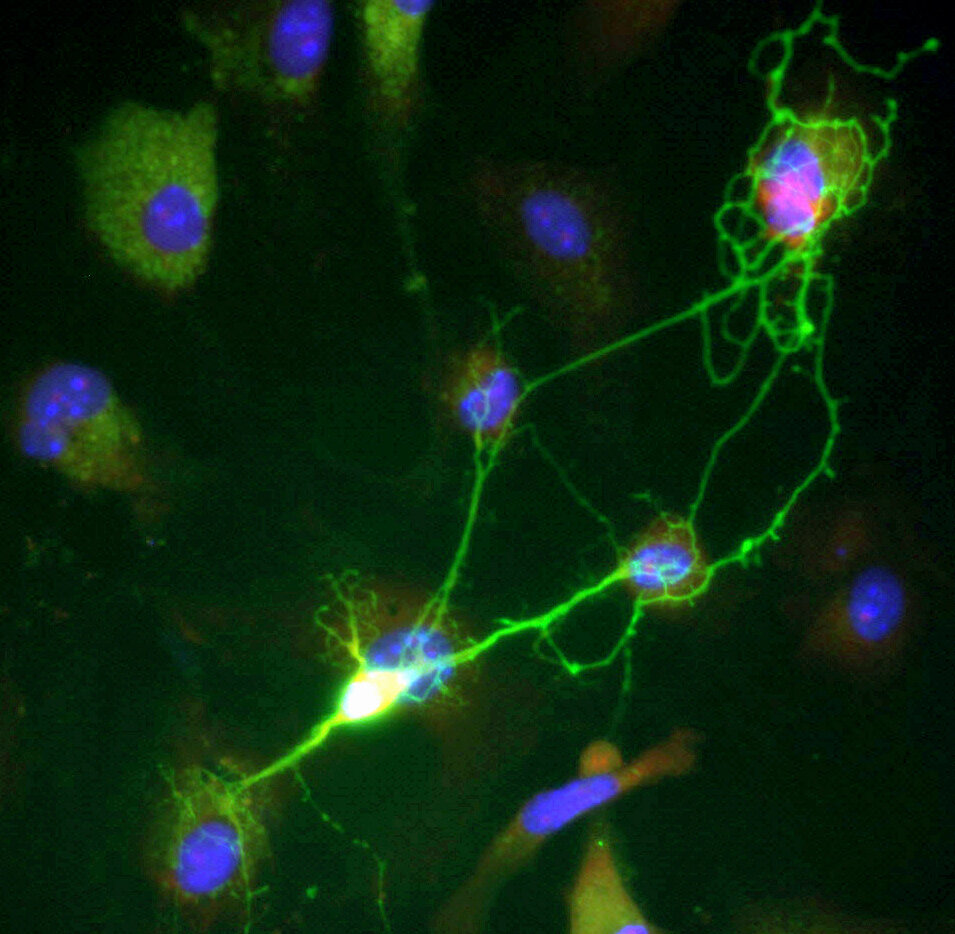
On November 20, 2025, researchers from Tulane University and eight partner institutions unveiled a groundbreaking discovery concerning pain signaling pathways. This research, co-led by Matthew Dalva, director of the Tulane Brain Institute, and Ted Price from the University of Texas at Dallas, proposes a novel mechanism that deepens our understanding of pain and has potential implications for safer and more effective treatments.
The Discovery: A New Pathway in Pain Signaling
The research, published in the esteemed journal Science, reveals that neurons can release a particular enzyme, known as vertebrate lonesome kinase (VLK), which activates pain signaling pathways following injury. This discovery not only sheds light on pain mechanisms but also provides insights into synaptic plasticity, a fundamental process underpinning learning and memory.
“This finding changes our fundamental understanding of how neurons communicate,” said Dalva. “We've discovered that an enzyme released by neurons can modify proteins on the outside of other cells to turn on pain signaling—without affecting normal movement or sensation.”
Mechanism and Implications
The research team identified that VLK interacts with proteins in the extracellular space between neurons, significantly altering signal transmission. The implications of this finding could be profound:
- Safer Pain Management: Targeting VLK opens up possibilities for pain treatments that avoid the serious side effects associated with traditional pain therapies that block receptors like NMDA.
- Innovative Drug Development: The ability to influence neuronal interactions from outside cells could lead to more straightforward drug designs, focusing on extracellular mechanisms rather than requiring drugs to penetrate cellular membranes.
- Broader Understanding of Neurological Processes: This mechanism may not only pertain to pain but could also reframe our understanding of neurological conditions related to learning and memory.
Experimental Evidence
In experimental setups, researchers demonstrated that:
- When VLK was removed from pain-sensing neurons in mice, these animals exhibited reduced pain responses post-surgery while maintaining normal movement and sensation.
- Conversely, increasing the levels of VLK amplified pain responses, emphasizing the role of this enzyme in pain pathways.
| Experimental Condition | Pain Response | Neuronal Activity |
|---|---|---|
| VLK Removal | Reduced Pain | Normal |
| Increased VLK | Increased Pain | Active |
Collaboration and Future Directions
The research was a collaborative effort among various prestigious institutions, including:
- The University of Texas Health Science Center at San Antonio
- The University of Texas MD Anderson Cancer Center
- The University of Houston
- Princeton University
- The University of Wisconsin-Madison
- New York University Grossman School of Medicine
- Thomas Jefferson University
Dalva highlighted the importance of this collaboration, stating, “Our findings were only possible through this kind of collaboration. By combining Tulane's expertise in synaptic biology with the strengths of our partners, we were able to reveal a mechanism that has implications not just for pain, but for learning and memory across species.”
The next steps involve investigating whether this signaling mechanism is specific to VLK or if it encompasses a broader array of proteins and biological processes. Understanding these pathways may potentially reshape therapeutic approaches for various neurological disorders.
Conclusion
The discovery of this VLK-mediated mechanism offers promising new avenues for safer pain management strategies. By focusing on the external modulation of pain signaling pathways, researchers may establish future drug therapies that minimize adverse effects while effectively addressing pain, which remains a critical focus in the field of neuroscience.
Reference
Kolluru D. Srikanth et al, The synaptic ectokinase VLK triggers the EphB2–NMDAR interaction to drive injury-induced pain, Science (2025). Read the full article here.









Discussion