

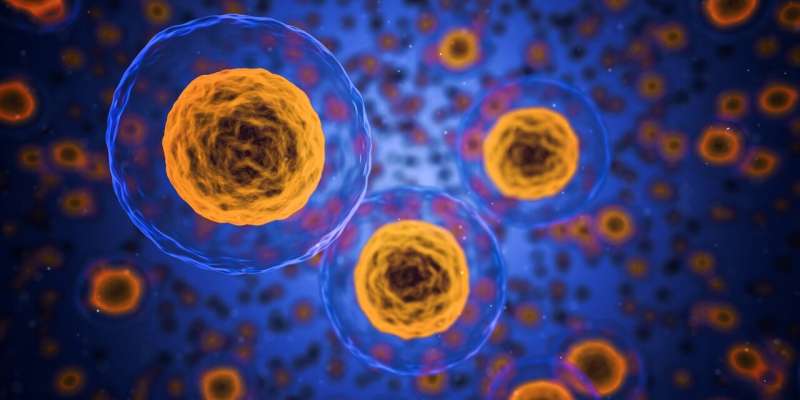
On September 2, 2025, researchers from the MUSC Hollings Cancer Center published groundbreaking findings regarding a new drug that targets cancer cell mitochondria to combat head and neck tumors. This innovative therapeutic approach offers a promising avenue in cancer treatment, particularly for patients with treatment-resistant forms of this aggressive cancer.
Introduction
Head and neck cancers, which develop in the cells lining the head and neck areas such as the nose, mouth, and throat, have historically been difficult to treat. Standard therapies can often yield limited results, and in many cases, the cancer returns despite rigorous treatment. The study published in Cancer Research, led by Besim Ogretmen, Ph.D., focuses on a synthetic compound known as LCL768, which demonstrates a novel mechanism of action by attacking cancer cells directly through their mitochondria.
Mechanism of Action
The innovative drug LCL768 operates by targeting mitochondria, the powerhouses of the cell, and leveraging a metabolic weakness inherent in cancer cells:
- Increase of C18-Ceramide: LCL768 enhances the levels of a specific ceramide, known as C18-ceramide, within the mitochondria of cancer cells. This compound plays a critical role in promoting cell death under conditions of stress.
- Mitophagy Induction: Elevated C18-ceramide levels trigger a cell process called mitophagy, which allows cells to eliminate damaged or unnecessary mitochondria. Cancer cells, heavily reliant on mitochondrial function for energy, compromise their survival when these structures are damaged.
- Fumarate Depletion: LCL768 also disrupts key metabolic pathways by blocking fumarate, a crucial molecule in cellular energy production. The blockade exacerbates the energy deficiency in cancer cells and enhances their susceptibility to cell death.
Research Findings
The research team conducted extensive trials using mouse models of head and neck cancer and lab-grown tumors derived from actual patient tissues. Key findings from their investigations include:
| Evaluation | Results |
|---|---|
| Increase in C18-Ceramide Levels | Significant enhancement of mitochondrial C18-ceramide post-treatment. |
| Impact on Tumor Growth | Observable slowed tumor progression after treatment with LCL768. |
| Fumarate Role | Supplementation of fumarate reversed LCL768's inhibitory effects, leading to rapid tumor regrowth. |
Potential Advantages Over Traditional Treatments
One of the most compelling aspects of LCL768 is its potential to minimize side effects compared to conventional cancer therapies such as chemotherapy or radiation:
- Targeted Action: The drug is designed to target specific pathways utilized predominantly by cancer cells, sparing healthy tissues that do not rely as heavily on these mechanisms.
- Reduced Side Effects: By focusing on cancer cells, LCL768 may lead to fewer adverse reactions typically associated with chemotherapy, which often results in damage to healthy cells.
- Dual Mechanism of Action: The ability to simultaneously induce mitophagy and deplete fumarate provides a comprehensive strategy to undermine the energy and stress management systems of cancer cells.
“This precise targeting could lead to fewer side effects than chemotherapy or radiation, which often damage healthy cells as well as cancer cells,” – Besim Ogretmen, Ph.D.
Future Directions
As LCL768 is still in the preclinical phase, the path ahead includes further testing to optimize its efficacy and safety profiles. The research team is keen on advancing LCL768 towards clinical trials with the objective of providing new treatment options for patients with challenging cancers. Future explorations might focus on:
- Developing patient-specific applications of LCL768 to maximize therapeutic outcomes.
- Investigating the broader implications of ceramide modulation across various tumor types.
- Assessing the long-term effects and sustainability of LCL768 as a viable treatment option.
Conclusion
In summary, LCL768 represents an innovative stride in cancer therapeutics by exploiting mitochondrial vulnerabilities and metabolic weaknesses in head and neck cancers. As researchers continue to unveil its potential, this compound could significantly alter the landscape of treatment options available for patients who previously faced limited alternatives.
References
Research Article: Natalia V. Oleinik et al, Ceramide-Induced Metabolic Stress Depletes Fumarate and Drives Mitophagy to Mediate Tumor Suppression, Cancer Research (2025).
For Further Reading: New drug targets cancer cell mitochondria to halt head and neck tumors (2025, September 2) retrieved from Medical Xpress.









Discussion