

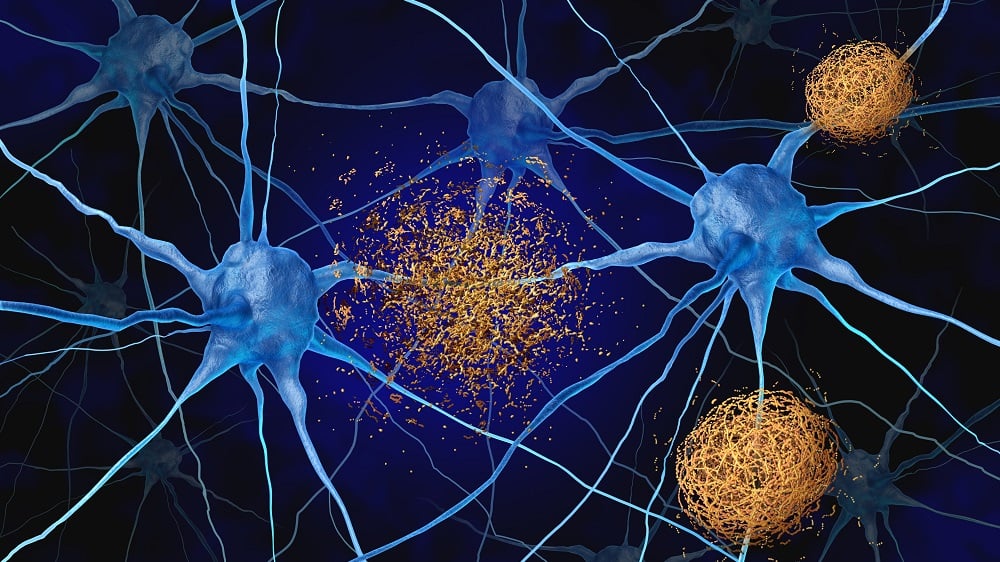
Nanostructures Trap Amyloid Beta, Rescuing Neurons
The advancements in nanotechnology are paving new avenues for treating neurodegenerative diseases such as Alzheimer’s disease. A recent study led by researchers at Northwestern University has introduced engineered nanostructures that demonstrate the potential to trap soluble amyloid beta (Aβ), significantly enhancing neuronal survival.
The Risk of Soluble Amyloid Beta
Soluble amyloid beta entering cells is a major contributor to the progression of Alzheimer’s disease. Misfolded proteins, such as Aβ, are implicated in neurodegenerative diseases like Alzheimer’s and amyotrophic lateral sclerosis (ALS). While amyloid plaques are a defining hallmark of Alzheimer’s, recent evidence suggests that soluble Aβ oligomers and early-stage fibrils are more harmful, directly correlating with cognitive decline. This understanding has shifted the focus of research towards the *detrimental effects* of these soluble forms rather than solely targeting plaques.
“The removal of plaques has shown limited impact on Alzheimer’s progression, highlighting the need to focus on soluble Aβ oligomers.” – Dr. Samuel I. Stupp, Senior Author
Engineered Peptide Amphiphiles (TPAs)
In the quest for effective treatment options, the research team explored engineered peptide amphiphiles (TPAs), which can self-assemble into nanofibers through a process known as supramolecular polymerization. Some existing TPAs, such as semaglutide, have gained favor in therapeutic applications.
To fabricate these custom fibers, the researchers combined amino acid chains (peptides) with trehalose - a natural sugar known for protecting proteins from misfolding. Briefly, the novel therapeutic concept aims to exploit the *degradability* of peptide-based drugs, wherein they break down into harmless lipids, amino acids, and sugars, thus minimizing adverse side effects.
Mechanism of Action
In their study, the researchers co-cultured human neurons derived from induced pluripotent stem cells (iPSCs) with Aβ42. The presence of TPA resulted in a significant reduction in cell death:
- With TPA, less than 15% of neurons died.
- Without TPA, over 60% of neurons succumbed to cell death.
This was attributed to the efficient entrapment of Aβ42 peptides by the metastable TPA nanofibers, which stabilized the peptides and inhibited their accumulation in neuronal lysosomes. The findings suggest that targeting soluble forms of Aβ early in the disease process could be a viable therapeutic strategy.
| Condition | Neuron Survival Rate | Presence of TPA |
|---|---|---|
| Without TPA | 40% | No |
| With TPA | 85% | Yes |
Challenges and Future Directions
Despite the promising results, several questions remain unanswered:
- Can TPA structures effectively cross the blood-brain barrier (BBB)?
- What mechanisms can be employed to facilitate the clearance of TPA-Aβ42 complexes from the brain?
- How will TPA affect the extracellular environment beyond blocking internalization of Aβ42?
The researchers advocate for the need to explore intranasal delivery methods to bypass the BBB and address the implications of increased BBB permeability observed in Alzheimer’s patients. Ensuring that TPA delivery mechanisms are both effective and safe will be crucial for advancing this innovative treatment.
Conclusions
This study adds to the growing body of evidence supporting the use of molecularly engineered nanomaterials to counter neurodegenerative diseases. By targeting the root factors associated with cognitive decline, the potential of such therapies to alter the course of Alzheimer’s disease is significant.
Literature Citations
[1] Gao, Z., Qiu, R., Dave, D. R., Chandravanshi, P., Soares, G. P., Smith, C. S., … & Stupp, S. I. (2025). Supramolecular Copolymerization of Glycopeptide Amphiphiles and Amyloid Peptides Improves Neuron Survival. Journal of the American Chemical Society.
[2] Hermann, D., Both, M., Ebert, U., Gross, G., Schoemaker, H., Draguhn, A., … & Nimmrich, V. (2009). Synaptic transmission is impaired prior to plaque formation in amyloid precursor protein–overexpressing mice without altering behaviorally-correlated sharp wave–ripple complexes. Neuroscience, 162(4), 1081-1090.
[3] Fagan, A. M., Mintun, M. A., Mach, R. H., Lee, S. Y., Dence, C. S., Shah, A. R., … & Holtzman, D. M. (2006). Inverse relation between in vivo amyloid imaging load and cerebrospinal fluid Aβ42 in humans. Annals of Neurology, 59(3), 512-519.
[4] Vinciguerra, D., Gelb, M. B., & Maynard, H. D. (2022). Synthesis and application of trehalose materials. Jacs Au, 2(7), 1561-1587.
[5] Palmqvist, S., Warmenhoven, N., Anastasi, F., Pilotto, A., Janelidze, S., Tideman, P., … & Hansson, O. (2025). Plasma phospho-tau217 for Alzheimer’s disease diagnosis in primary and secondary care using a fully automated platform. Nature Medicine, 1-8.









Discussion