


Recent advancements in science reveal promising new approaches for diagnosing and treating endometriosis, a chronic condition that affects millions of women globally. A groundbreaking study led by researchers at the University of Mississippi illustrates the potential of using gold-laced nanoparticles to both identify and target the painful tissue associated with this disease without the need for invasive surgeries.
Understanding Endometriosis
Endometriosis is characterized by the growth of tissue similar to the uterine lining outside the uterus, causing significant pain, inflammation, and other symptoms. As stated by Eden Tanner, assistant professor of chemistry and biochemistry, the condition affects numerous women who often endure chronic pain and may not be aware that such pain is not normal. Despite its commonality, diagnosing endometriosis remains a challenge, as noted in research findings.
The condition occurs when endometrial cells, which typically shed during menstruation, proliferate outside the uterus instead. This cyclical growth can result in complications such as:
- Severe pelvic pain: Many women report intense pain, especially during menstrual periods.
- Infertility: Endometriosis is often diagnosed in women seeking treatment for infertility when conventional methods fail.
- Chronic fatigue and gastrointestinal issues: Related symptoms can significantly impact a patient's quality of life.
Challenges in Diagnosis and Treatment
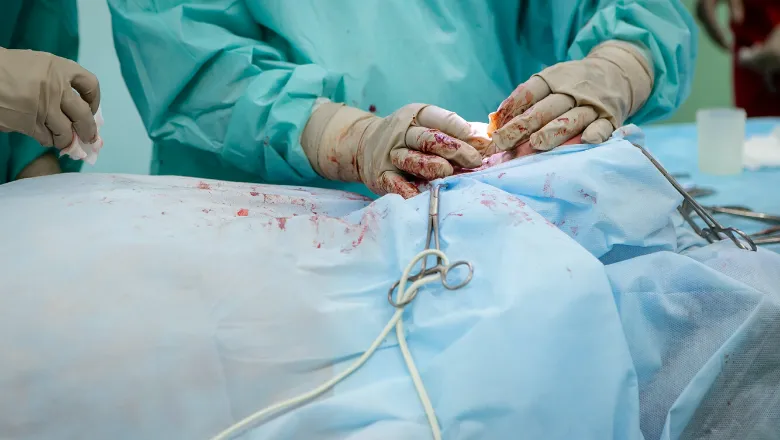
The current diagnostic methods for endometriosis primarily involve invasive procedures, such as laparoscopy. In this surgical technique, a telescope-like instrument is inserted to visually inspect the abdominal cavity for endometrial tissue. The limitations of laparoscopic surgery not only include its invasiveness but also present challenges in follow-up treatments, as endometriosis frequently recurs.
Current treatment options are limited and include:
| Treatment Option | Description |
|---|---|
| Hormone Therapy | Utilizes hormonal medicines to decrease the growth of endometrial tissue and alleviate symptoms. |
| Surgery | Involves the removal of endometrial tissue, but the recurrence rate is significantly high. |
Innovative Solutions Using Nanoparticles
The recent study discussed in _Communications Chemistry_ highlights a revolutionary approach utilizing nanoparticles coated with ionic liquid and gold to navigate the body’s immune system. The nanoparticles are designed to attach to neutrophils—white blood cells naturally recruited to areas of inflammation.
As Priyavrat Vashisth, a doctoral candidate in chemistry and co-author of the study, explains, "Neutrophils are among the first immune cells recruited to sites of inflammation, and can therefore be utilized to deliver targeted treatment." Through this approach, the research team envisions a methodology that enables:
- Diagnosis via Imaging: The gold cores within the nanoparticles enhance the visibility of inflammatory lesions during X-ray or CT scans.
- Targeted Treatment: The near-infrared light application can selectively heat and destroy only the endometrial tissue, thus avoiding damage to surrounding healthy cells.
Potential for Less Invasive Treatment
The excitement surrounding these nanoparticles stems not only from their diagnostic potential but also from their capability to offer a less invasive treatment option. The gold nanoparticles could potentially facilitate the selective killing of endometrial tissue, allowing for natural excretion of both the nanoparticles and the tissue debris. This ensures a minimized risk associated with conventional surgical methods.
Despite the promising results obtained in laboratory settings, significant research remains before this method can be employed in clinical practice. Initial findings necessitate further testing, including:
- Assessment of nanoparticle efficacy in animal models.
- Evaluation of long-term safety and biological responses in potential patients.
Conclusion and Future Directions
The research conducted by Tanner, Vashisth, and their team emphasizes the urgent need for innovative management techniques for endometriosis that alleviate patient suffering without excessive financial burden. As stated by Vashisth, “Our aim is to provide a treatment option that is not only effective but also affordable, given that many women currently cannot access treatment for endometriosis.” This pioneering approach of utilizing gold-laced nanoparticles could revolutionize how we diagnose and manage this chronic condition, offering hope to many women suffering worldwide.
References
Vashisth, P., et al. (2026). Ionic liquid-coated gold core polymeric nanoparticles for selective neutrophil hitchhiking towards endometriosis treatment. _Communications Chemistry_. DOI: 10.1038/s42004-026-01909-8
For further reading on endometriosis and treatment options, please explore the full study here.




Discussion