

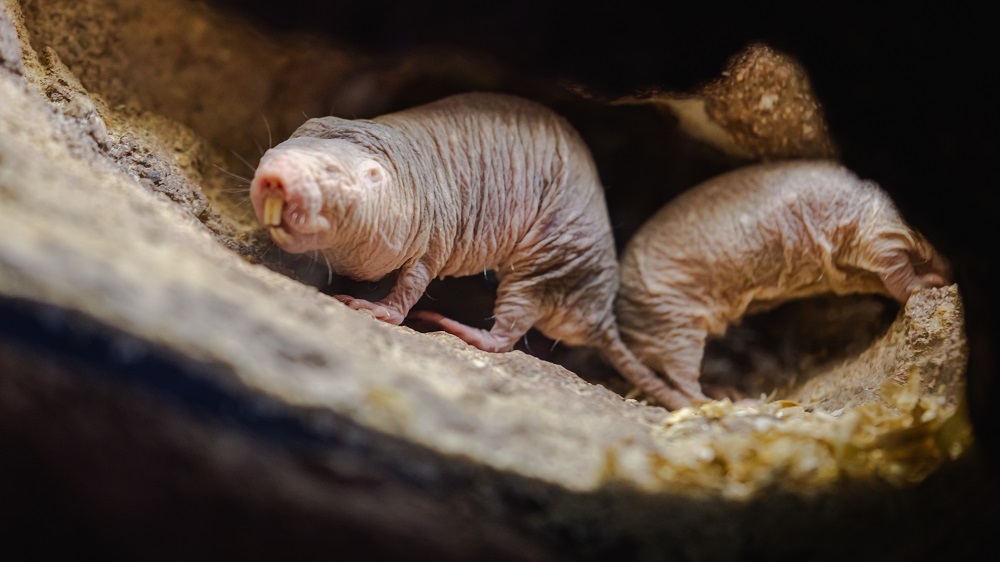
The recent study published in Science by Chen et al. (2025) sheds light on the intriguing longevity mechanisms present in naked mole rats (NMRs) and emphasizes the differences in DNA repair processes among species. This research opens new avenues in our understanding of aging and highlights the potential benefits of cross-species protein function analysis.
Naked Mole Rats: A Unique Model for Longevity
Naked mole rats are remarkable creatures, notable for their impressive lifespan, which can reach up to 40 years in captivity, a significant trait when compared to other rodents of a similar size. This extended lifespan has led researchers to investigate the underlying biological adaptations that contribute to their longevity.
The Role of cGAS Proteins in DNA Repair
Central to this study is the calcium-regulated nucleoside-acid synthase (cGAS) protein. The unique version of cGAS found in naked mole rats plays a pivotal role in enhancing DNA repair mechanisms, contrasting starkly with that of humans and mice, which tends to hinder such processes. The finding that just four amino acid differences correspond to these functional discrepancies is profound.
Mechanisms of cGAS in DNA Repair
- Detection of foreign DNA: cGAS is traditionally known for its role in identifying foreign DNA within the cytosol, triggering inflammatory responses.
- Nuclear Presence: In the nucleus, cGAS binds to DNA, an action that may prevent autoreactivity during cellular division.
- Facilitating Homologous Recombination: In naked mole rats, cGAS enhances homologous recombination, an essential repair mechanism, by acting as a temporary docking platform.
Comparative Analysis of cGAS Functionality
Table 1 below summarizes the differences in cGAS functionality between naked mole rats and other species:
| Species | cGAS Function | Effect on DNA Repair |
|---|---|---|
| Naked Mole Rat | Promotes homologous recombination | Enhances DNA repair, contributes to longevity |
| Human/Mice | Inhibits homologous recombination | Impairs DNA repair, potential link to increased aging |
Experimental Findings and Implications
The researchers conducted experiments using transgenic fruit flies and mice to evaluate the impact of the naked mole rat's cGAS on various biological functions:
- Increased Lifespan: Fly experiments demonstrated that expressing naked mole rat cGAS significantly extended lifespan.
- Improved Gut Integrity: Older flies showed enhanced gut barrier integrity when expressing the naked mole rat variant.
- Healthier Aging Metrics: Mice receiving the NMR cGAS showed reduced signs of aging, such as improved hair and skin health, and lower levels of inflammation markers.
Challenges Ahead in Longevity Research
Despite the encouraging results, researchers caution against the straightforward application of these findings to humans. As highlighted by Martinez et al., there remains substantial complexity in the interactions of longevity factors across different organisms. The unique adaptations of each species need careful consideration before any potential translational applications.
“The findings from Chen et al. describe an unexpected role for naked mole-rat cGAS in the nucleus that influences longevity.” – John Martinez, Co-author
Future Perspectives on Longevity and Aging
Research into the naked mole rat's cGAS variant could pave the way for novel interventions aimed at improving DNA repair mechanisms in humans, potentially leading to enhanced healthspan and longevity. Future studies should focus on:
- Determining the roles of cGAS variants in other long-lived species.
- Investigating how specific amino acid alterations can be utilized for developing resilience against aging.
- Understanding the broader implications of these findings for gene therapy approaches in humans.
Literature Cited
[1] Chen, Y., et al. (2025). A cGAS-mediated mechanism in naked mole-rats potentiates DNA repair and delays aging. Science, 390(6769), eadp5056.
[2] Zhang, Z., et al. (2023). Increased hyaluronan by naked mole-rat Has2 improves healthspan in mice. Nature, 621(7977), 196-205.
[3] Volkman, H. E., et al. (2019). Tight nuclear tethering of cGAS is essential for preventing autoreactivity. Elife, 8, e47491.
[4] Martinez, J. C., et al. (2025). Longevity steps on the cGAS. Science, 390(6769), 126-127.
Conclusion
The insights gained from the naked mole rat's unique genetic adaptations provide a hopeful glimpse into potential strategies for combating age-related diseases and extending human lifespan. By harnessing the evolutionary knowledge encapsulated within these long-lived species, we may yet unlock the secrets to enhanced longevity for all.









Discussion