

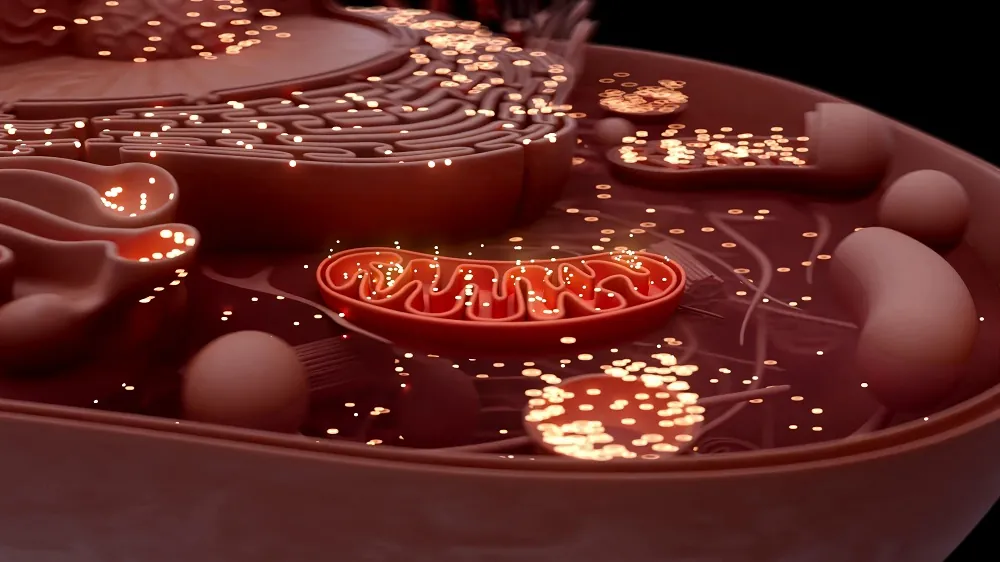
The recent advancement in mitochondrial DNA editing represents a significant leap in genetic research, showcasing innovative techniques that diverge from traditional methods such as CRISPR. A study released on July 11, 2025, highlights how researchers successfully employed a new base editor to manipulate mitochondrial DNA, bringing us closer to treatments for various mitochondrial diseases.
Overview of Mitochondrial DNA Editing
Unlike nuclear DNA editing, which has largely been dominated by CRISPR technology, mitochondria possess their own circular DNA (mtDNA) that plays a crucial role in cellular energy production. Given that mutations in mtDNA are linked to numerous diseases and are increasingly associated with aging, the ability to edit this DNA is of paramount importance [1]. However, the challenge has always been in delivering editing tools effectively, as traditional CRISPR components are too large to enter the mitochondria.
The Research Findings
In the study published in PLOS Biology, scientists from the University Medical Center Utrecht harnessed the power of the double-stranded DNA deaminase toxin A-derived cytosine base editor (DdCBE), combined with guiding proteins known as TALE, to create effective in vitro disease models and explore therapeutic strategies for mitochondrial disorders.
Creating Disease Models
The researchers introduced a loss-of-function mutation (m.15150G>A) into human primary adult liver stem cell-derived organoids to create models of mitochondrial diseases. Although this mutation has not been linked to any known disease, it signified a step towards developing models necessary for understanding and potentially curing mitochondrial disorders.
- Mitochondrial Dysfunction: Mitochondrial dysfunction and mtDNA mutations are central to various age-associated pathologies.
- Heteroplasmy: The presence of multiple mtDNA variants within a single cell complicates the editing process, necessitating multiple successful edits across the many copies present.
- Range of Heteroplasmy Levels: The team successfully generated a collection of organoid lines exhibiting a range of heteroplasmy levels, enabling the exploration of how different levels of mutation impact disease severity.
Fixing Mutations
In addition to creating disease models, the researchers aimed to correct known harmful mutations. They utilized the DdCBE tool to rectify the pathogenic m.4291T>C mutation found in fibroblasts from patients suffering from Gitelman-like syndrome, a group of inherited kidney disorders. Here are notable points from their findings:
| Process | Results | Observation |
|---|---|---|
| Mutation Introduction | Successful editing of m.15150G>A mutation | Enabled creation of disease models |
| Correction Attempt | 76% to 81% mutation correction | Restoration of mitochondrial potential |
| Energy Production | Variable improvements | Inconsistent results across cell lines |
Challenges and Future Directions
While the DdCBE method proved promising in correcting mutations, challenges remain. The variability in editing efficiency highlights a need for further optimization. Factors contributing to this challenge include:
- Achieving a high number of edits per cell due to the numerous mitochondrial copies.
- Ensuring uniform editing across cell populations.
- Minimizing off-target effects that may arise during the editing process.
"Adapting precision DNA editing tools such as base editors to target the mitochondrial genome holds significant promise for both modeling and treating mtDNA mutation-associated diseases." - Dr. Amutha Boominathan
Delivery Techniques
A notable aspect of this groundbreaking study was the exploration of delivery mechanisms for the editing tools. The initial reliance on viral vectors was later enhanced by using modified RNA (modRNA). This approach proved to have advantages, such as:
- Increased stability of the delivered RNA.
- Reduced immune detection and cytotoxicity compared to DNA delivery methods.
Conclusion
The journey towards effective mitochondrial DNA editing is not without its hurdles, yet the recent advancements underscore a significant milestone in genetic research. Continued exploration is needed to refine these techniques, but the potential for addressing mitochondrial diseases opens a new frontier in medical science.
Literature Cited
[1] Joore, I. P., Shehata, S., Muffels, I., Castro-Alpízar, J., Jiménez-Curiel, E., Nagyova, E., … & Koppens, M. A. (2025). Correction of pathogenic mitochondrial DNA in patient-derived disease models using mitochondrial base editors. PLoS biology, 23(6), e3003207.
[2] Sprason, C., Tucker, T., & Clancy, D. (2024). MtDNA deletions and aging. Frontiers in Aging, 5, 1359638.
As a reminder, we request your support. We are a non-profit foundation dedicated to providing free access to invaluable information. Your contributions sustain our mission of independent journalism and educational outreach.





Discussion