

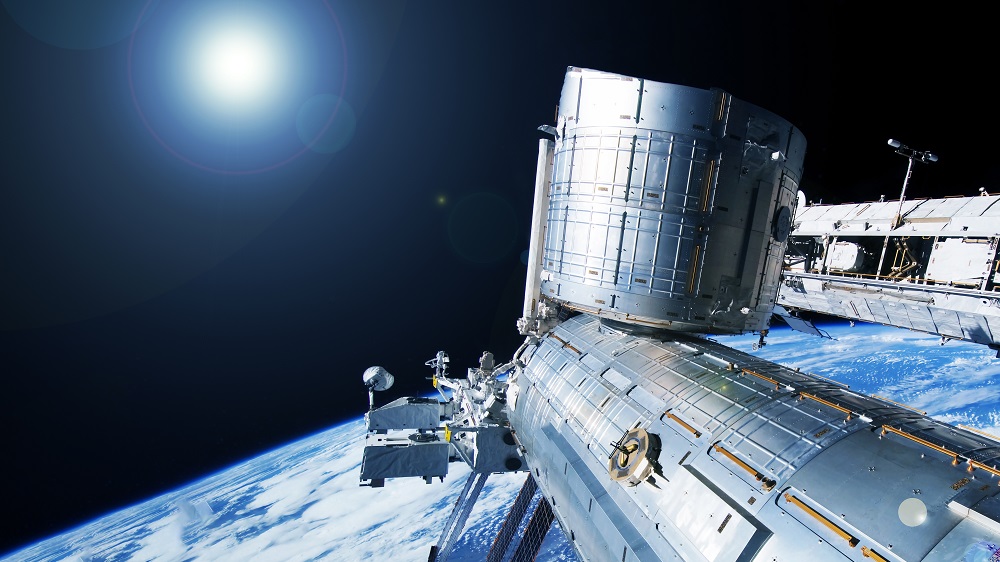
A recent study published in Cell Stem Cell highlights the intricate relationship between microgravity and stem cell behavior, particularly how applicable stem cell research is when conducted in orbit. The research indicates that the unique conditions of space, such as microgravity, have notable effects on cellular processes that could be advantageous for medical applications on Earth.
Cells Behave Differently in Microgravity
The challenges posed by replicating gravitational conditions on Earth have led scientists to conduct vital experiments aboard the International Space Station (ISS). Notably, research has shown that cells cultured in microgravity can proliferate without the need for scaffolding to support three-dimensional growth [1]. However, it is also evident that microgravity can lead to some detrimental effects, such as the failure of embryonic stem cells to differentiate and regenerate tissues [3].
Neural organoids, which are vital for understanding various neurodegenerative diseases, have demonstrated accelerated maturation in microgravity environments [2]. This finding is promising, especially for diseases like Parkinson’s, where the dopaminergic neurons used in the study exhibited reduced stress markers and enhanced growth. There is potential for future research to explore similar effects for conditions like Alzheimer’s disease.
In addition, the impact of microgravity on bone health has been a focal point of research. Studies have illustrated that stem cells from mice in microgravity exhibited enhanced bone regeneration after returning to Earth [5]. Conversely, human bone marrow stem cells subjected to similar conditions displayed signs of reduced calcification and alterations in the extracellular matrix, indicating a complex interplay between microgravity and bone cell behavior [6].
Mechanical Forces Control How Cells Grow
Cells are constantly influenced by mechanical forces—a concept known as mechanotransduction. Under Earth’s gravity, cells evolve to manage these stresses effectively. In microgravity, however, they adapt in unexpected ways [7]. For instance, the Hippo-YAP signaling pathway, crucial for cellular responses to mechanical stress, shows pronounced changes in cells grown in space. Cardiovascular progenitor cells demonstrate an upregulation of YAP, indicating enhanced regenerative potential [8]. When developed into organoids in microgravity, these progenitors yield larger and more cellular structures compared to those grown under gravitational conditions [9].
Despite the potential advantages, the complex reactions of stem cells to microgravity warrant further investigation. The reviewers of this research call for comprehensive epigenetic testing to elucidate the factors driving these changes. Additionally, the need for studies on organoid immunology and vasculature is emphasized, suggesting that insights derived from astronaut-derived induced pluripotent stem cells (iPSCs) could be transformative.
Engineering Applications
The cost of transporting materials into space poses a significant challenge for research efforts and practical applications. However, producing functional cells, a notoriously expensive endeavor on Earth, might become feasible in space where some processes can be streamlined. For instance, bioprinting of organoids has been successfully conducted on the ISS, creating opportunities for scalable production of functional cells [11].
Interestingly, not just cardiac organoids benefit from microgravity; chondrocytes, essential for cartilage growth, have shown up to double the growth rate in space conditions [11]. The prospect of producing these cells off-planet opens up exciting avenues for regenerative medicine. However, due to their unique development environments, there are concerns regarding how these cells will perform under Earth conditions, particularly withstanding mechanical stresses [12].
As we continue to explore these scientific frontiers, the long-term objective remains clear: enhancing approaches to treat various age-related diseases using cells cultivated in the microgravity of space. While this research is still in its infancy, overcoming the technical barriers, including radiation protection for astronauts, could usher in a new era of medical therapies.
Literature Cited
- [1] Jogdand, A., Landolina, M., & Chen, Y. (2024). Organs in orbit: how tissue chip technology benefits from microgravity, a perspective. Frontiers in lab on a Chip Technologies, 3, 1356688.
- [2] Marotta, D., et al. (2024). Effects of microgravity on human iPSC-derived neural organoids on the International Space Station. Stem Cells Translational Medicine, 13(12), 1186-1197.
- [3] Blaber, E. A., et al. (2015). Microgravity reduces the differentiation and regenerative potential of embryonic stem cells. Stem cells and development, 24(22), 2605-2621.
- [4] Grimm, D., et al. (2016). The impact of microgravity on bone in humans. Bone, 87, 44-56.
- [5] Blaber, E. A., et al. (2014). Mechanical unloading of bone in microgravity reduces mesenchymal and hematopoietic stem cell-mediated tissue regeneration. Stem cell research, 13(2), 181-201.
- [6] Bradamante, S., et al. (2018). SCD–stem cell differentiation toward osteoblast onboard the international space station. Microgravity Science and Technology, 30(5), 713-729.
- [7] Wu, X. T., et al. (2022). Cells respond to space microgravity through cytoskeleton reorganization. The FASEB Journal, 36(2), e22114.
- [8] Camberos, V., et al. (2019). Effects of spaceflight and simulated microgravity on YAP1 expression in cardiovascular progenitors: implications for cell-based repair. International Journal of Molecular Sciences, 20(11), 2742.
- [9] Rampoldi, A., et al. (2022). Space microgravity improves proliferation of human iPSC-derived cardiomyocytes. Stem Cell Reports, 17(10), 2272-2285.
- [10] Jeyaraman, M., et al. (2024). Exploring New Horizons: Advancements in Cartilage Tissue Engineering Under Space Microgravity. Cureus, 16(8).
- [11] Jeyaraman, M., et al. (2024). Exploring New Horizons: Advancements in Cartilage Tissue Engineering Under Space Microgravity. Cureus, 16(8).
- [12] Huang, P., et al. (2020). Feasibility, potency, and safety of growing human mesenchymal stem cells in space for clinical application. npj Microgravity, 6(1), 16.
For ongoing updates in this area of research and other advancements in regenerative medicine, please consider supporting independent journalism by making a donation to help sustain our efforts.









Discussion