

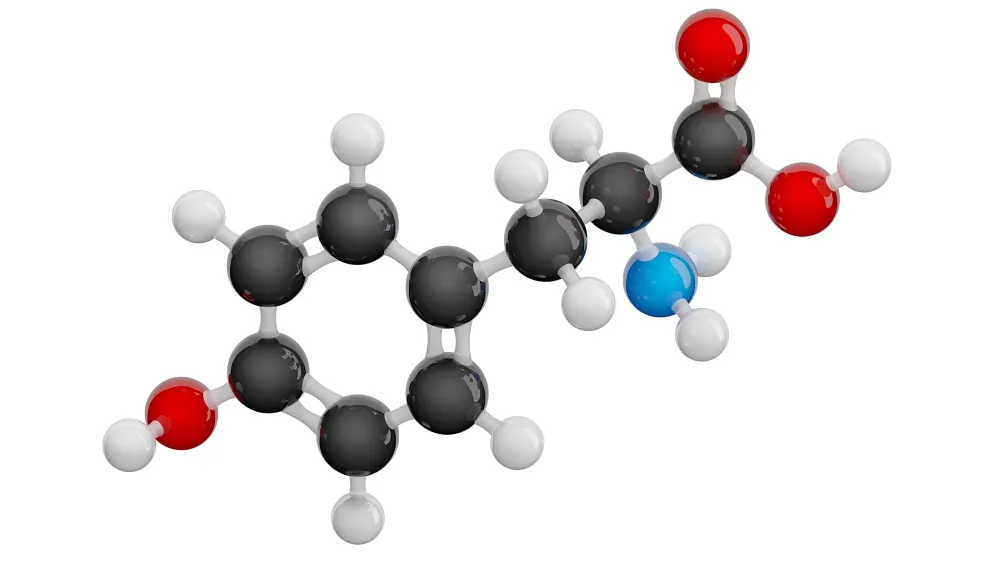
The study of amino acids' influence on lifespan has received increased attention in the scientific community, particularly focusing on two key players: phenylalanine and tyrosine. Recent research suggests that these amino acids play distinct roles in the aging process, and their levels may significantly impact longevity.
Key Findings
Research indicates that:
- Lower tyrosine levels are associated with longer lifespans in men, even when adjusting for levels of phenylalanine.
- Phenylalanine does not seem to significantly impact lifespan when controlling for tyrosine.
- The levels of both amino acids are influenced by genetic factors.
- Tyrosine reduction may be a viable area for interventions in lifespan extension.
A recent cohort study examined the relationship between these amino acids and lifespan, highlighting intriguing sex-specific differences. Observational data indicate that tyrosine is correlated with shorter lifespans, while findings for phenylalanine are more inconsistent [1].
Investigating Individual Amino Acids
Model organisms have demonstrated the importance of amino acids like tyrosine in lifespan extension. However, as proteins comprise 20 different amino acids, individual investigation is necessary. Recent findings report that certain amino acids may help guard against age-related diseases while varying in their impact on healthspan and lifespan.
Tyrosine serves as a crucial metabolite, impacting neurotransmitter production such as dopamine, norepinephrine, and epinephrine, all of which are key to regulating mood and cognition [2]. Animal studies suggest that restricting tyrosine could enhance lifespan by inhibiting insulin signaling and impacting the mTORC1 pathway [3].
Conversely, phenylalanine, which is a precursor to tyrosine, has been linked to detrimental health processes such as telomere attrition [4] and chronic inflammatory diseases [5], factors critical to aging and mortality.
Study Methodology
The researchers utilized data from the UK Biobank, consisting of 272,475 participants. This large dataset provides valuable insights, albeit with certain constraints:
- The analysis was limited to a single measurement of tyrosine and phenylalanine levels, making it difficult to assess changes over time.
- Confounding factors associated with participants' health and socioeconomic status were evident, influencing the results.
To counteract these issues, the study employed Mendelian randomization (MR) to utilize genetic variants as instruments less affected by socioeconomic factors. However, variations in the methodologies might lead to differing interpretations of the results.
Findings on Mortality and Risk Factors
The analysis adjusted for numerous confounders and unveiled:
- An association between elevated plasma phenylalanine and higher all-cause mortality in both genders.
- Higher plasma tyrosine levels correlated with increased all-cause mortality risk, notably in men.
Genetic Analysis and Lifespan Implications
Genetic analyses uncovered variants linked to phenylalanine and tyrosine levels. The researchers identified key single-nucleotide polymorphisms (SNPs) vital for amino acid regulation:
| Gene Variant | Association with Amino Acid |
|---|---|
| Gene1 | Phenylalanine |
| Gene2 | Tyrosine |
| Gene3 | Both |
The MR analysis illustrated that a genetically predicted increase in phenylalanine did not significantly correlate with lifespan overall, while higher tyrosine levels were consistently linked to shorter lifespans in both sexes.
Potential Interventions and Future Research
In summary, the researchers have concluded that tyrosine appears to play a significant role in lifespan reduction, separate from phenylalanine's effects. These findings highlight the potential for tyrosine reduction as an intervention strategy.
Future studies should aim to:
- Investigate the molecular mechanisms linking tyrosine restriction and lifespan extension.
- Conduct larger cohort studies to clarify the sex-specific impacts observed.
In light of these findings, researchers are encouraged to explore dietary modifications or therapeutic interventions targeting tyrosine levels to potentially extend lifespan and enhance overall health.
Literature Cited
[1] Zhao, J. V., Sun, Y., Zhang, J., & Ye, K. (2025). The role of phenylalanine and tyrosine in longevity: a cohort and Mendelian randomization study. Aging, 17(10), 2500–2533.
[2] Fernstrom, J. D., & Fernstrom, M. H. (2007). Tyrosine, phenylalanine, and catecholamine synthesis and function in the brain. The Journal of nutrition, 137(6 Suppl 1), 1539S–1548S.
[3] Kosakamoto, H., Sakuma, C., Okada, R., Miura, M., & Obata, F. (2024). Context-dependent impact of the dietary non-essential amino acid tyrosine on Drosophila physiology and longevity. Science advances, 10(35), eadn7167.
[4] Eriksson, J. G., et al. (2017). Higher serum phenylalanine concentration is associated with more rapid telomere shortening in men. The American journal of clinical nutrition, 105(1), 144–150.
[5] Neurauter, G., et al. (2008). Chronic immune stimulation correlates with reduced phenylalanine turnover. Current drug metabolism, 9(7), 622–627.
[6] Guasch-Ferré, M., et al. (2016). Metabolomics in Prediabetes and Diabetes: A Systematic Review and Meta-analysis. Diabetes care, 39(5), 833–846.
[7] Dato, S., et al. (2019). Amino acids and amino acid sensing: implication for aging and diseases. Biogerontology, 20(1), 17–31.









Discussion