

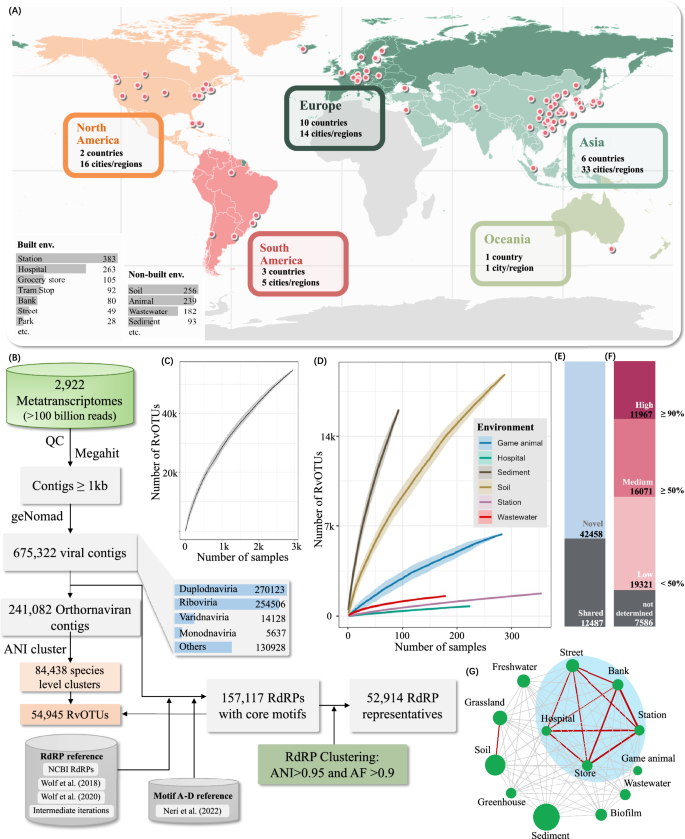
A pioneering study has been undertaken by scientists worldwide, resulting in the creation of the largest known atlas of RNA viruses in urban and peri-urban environments. This significant research, spearheaded by the University of Hawaiʻi at Mānoa's John A. Burns School of Medicine (JABSOM), has cataloged over 55,000 RNA viruses across nearly 100 cities globally, with an astonishing 80% of these viruses being previously unrecorded.
Understanding the Study
Published in Nature Communications, the study delves into the diverse landscape of RNA viruses, illuminating their ecological and health implications. Researchers collected metatranscriptomic samples from various environments including soil, sediment, and wastewater, before, during, and after the COVID-19 pandemic.
Methodology
- Sample Collection: A total of 3,326 samples were gathered across 102 cities in 31 countries.
- Identification: Researchers identified 54,945 RNA viral operational taxonomic units (RvOTUs), vastly expanding our understanding of virus diversity.
- Data Analysis: Conducted phylogenetic reconstruction of RNA viruses to elucidate their evolutionary relationships.
Key Findings
This extensive research revealed that urban areas are rich in RNA viruses. Specifically, the study found:
- Out of 54,945 RNA viruses, approximately 77% had not been documented previously.
- Significant interactions between these RNA viruses and ESKAPE pathogens, which are known for their antibiotic resistance.
- Emerging patterns of viral diversity, particularly pronounced in high-density human settings such as transit hubs and hospitals.
Potential Public Health Implications
Dr. Joshua Burkhart, a key researcher involved in the study, underscores the optimistic viewpoint toward the findings. "This extensive catalog of RNA viruses opens new avenues for understanding which viruses might pose threats to human health. Our approach prepares us better for future viral outbreaks," said Dr. Burkhart.
The identification of RNA viruses that interact with antibiotic-resistant bacteria may pave the way for developing new antibacterial agents targeted at ESKAPE pathogens, thereby transforming public health strategies.
Limitations of the Study
Despite the robust framework provided by this research, it admits certain limitations such as:
- Potential biases in sample collection methodology.
- Challenges encountered in detecting viruses in diverse urban environments.
Conclusion
This groundbreaking work marks a crucial advance in the fields of viral ecology and public health preparedness, reinforcing the necessity for continuous surveillance of viral landscapes in urban settings.
References
| Source | Link |
|---|---|
| Diversity and distinctive characteristics of the global RNA virome in urban and peri-urban environments | Nature Communications |
| JABSOM Research Helps Build a Global Atlas of Viruses | JABSOM News |
| University of Hawaiʻi System News on Global Virus Atlas | Hawaii System News |
For more in-depth understanding, consult the original publication in Nature Communications.





Discussion