

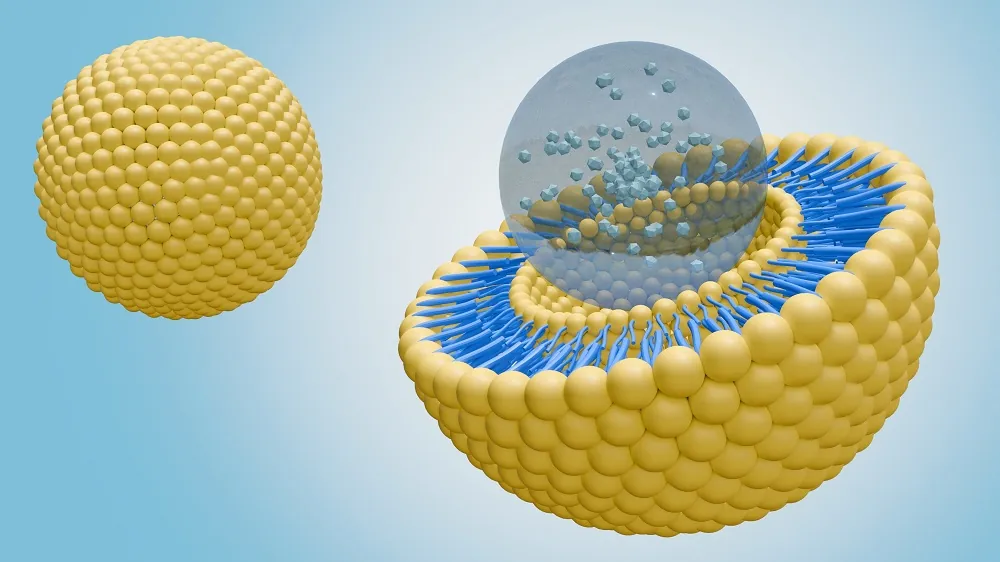
The advancement of gene therapy has attracted immense interest over the years, particularly for its potential application in regenerative medicine. A recent study published in the Cell journal Molecular Therapy Nucleic Acids focused on a novel method of modifying mesenchymal stem cells (MSCs) using niosomes, a newly discovered non-viral vector approach.
Introduction to Niosomes
Niosomes are a type of lipid-based vesicles, structurally similar to traditional liposomes but generated using non-toxic surfactants akin to those found in household detergents. This innovative method aims to enhance the safety of gene delivery systems, which have historically utilized viral vectors known to carry significant risks, including potential carcinogenic effects and adverse immune responses that may accelerate aging [1].
The Research Context
The research team undertook a systematic investigation of various niosome formulations, testing their efficacy in delivering genetic material to senescent MSCs. The senescence of the MSCs was induced through the application of Palbociclib, a compound known to interrupt the cell cycle, and confirmed through morphological assessments and the expression of senescence-associated secretory phenotype (SASP) markers, including interleukins and CDKN1A.
Methodology
The study employed different formulations of niosome complexes (termed nioplexes), wherein the niosomes were combined with reporter DNA in varying ratios. The key modifications investigated included:
- The incorporation of squalene or cholesterol as components of the niosome formulations.
- The addition of sucrose to assess its impact on particle size and effectiveness.
Results: Particle Formation and Effectiveness
The researchers noted a significant interaction between sucrose and cholesterol-based niosomes, enhancing their ability to protect and transfect DNA. The findings indicated:
| Composition | Particle Uptake Effectiveness (Non-senescent Cells) | Particle Uptake Effectiveness (Senescent Cells) |
|---|---|---|
| Squalene with Sucrose | High | Low |
| Cholesterol without Sucrose | Moderate | High |
| Cholesterol with Sucrose | Moderate | Very High |
Safety Profile
Critically, the study highlighted that the nioplexes demonstrated a more favorable safety profile compared to traditional lipofectamine methods, which were associated with significant cytotoxic effects. The findings showed that:
- Neither squalene nor cholesterol formulations resulted in increased mortality among MSCs compared to control groups.
- Incorporating sucrose led to only negligible increases in cell mortality, showcasing improved biocompatibility.
Mechanism of Uptake
Endocytosis analysis revealed distinct mechanisms for cellular uptake between senescent and non-senescent cells, suggesting the need for tailored approaches in future gene therapies for different cell states.
“This research paves the way for safer, non-viral gene delivery methods that could revolutionize stem cell therapeutic applications.” – Dr. Emily Tran, Lead Researcher
Conclusion and Future Directions
This pioneering study underscores the potential of niosomes in gene therapy, emphasizing a need for further research to establish the safety and efficacy of loading therapeutic genes into these carriers. Future work should focus on:
- Identifying appropriate therapeutic genes suitable for niosome encapsulation.
- Assessing the long-term safety of niosome-based therapies in living organisms.
- Optimizing the formulations for higher transfection rates across diverse cell types.
The versatility and improved safety profile of niosomes, especially for applications involving senescent cells, present an exciting frontier in gene therapy that warrants continued exploration.
Literature Cited
[1] Fafián-Labora, J. A., & O’Loghlen, A. (2020). Classical and nonclassical intercellular communication in senescence and ageing. Trends in Cell Biology, 30(8), 628-639.
[2] Mitchell, M. J., Billingsley, M. M., Haley, R. M., Wechsler, M. E., Peppas, N. A., & Langer, R. (2021). Engineering precision nanoparticles for drug delivery. Nature Reviews Drug Discovery, 20(2), 101-124.
[3] Yin, H., et al. (2014). Non-viral vectors for gene-based therapy. Nature Reviews Genetics, 15(8), 541-555.
[4] Villate-Beitia, I., et al. (2018). Polysorbate 20 non-ionic surfactant enhances retinal gene delivery efficiency of cationic niosomes after intravitreal and subretinal administration. International Journal of Pharmaceutics, 550(1-2), 388-397.
[5] Attia, N., et al. (2018). Stem cell-based gene delivery mediated by cationic niosomes for bone regeneration. NanoMedicine: Nanotechnology, Biology and Medicine, 14(2), 521-531.
[6] Puras, G., et al. (2015). Protamine/DNA/niosome ternary nonviral vectors for gene delivery to the retina. Molecular Pharmaceutics, 12(10), 3658-3671.
[7] Carballo-Pedrares, N., et al. (2022). Chondrogenic differentiation of human mesenchymal stem cells via SOX9 delivery in cationic niosomes. Pharmaceutics, 14(11), 2327.
[8] Carballo-Pedrares, N., et al. (2021). Niosomes-based gene delivery systems for effective transfection of human mesenchymal stem cells. Materials Science and Engineering: C, 128, 112307.
[9] Singh, J., et al. (2012). Evaluation of cellular uptake and intracellular trafficking as determining factors of gene expression for amino acid-substituted gemini surfactant-based DNA nanoparticles. Journal of Nanobiotechnology, 10, 1-14.









Discussion