


How a Growth Factor and SIRT1 Might Combat Disc Degeneration
Eliminating damaged mitochondria seems to be the key.
March 30, 2026
In spinal disc cells, the growth factor FGF21 upregulates the sirtuin SIRT1, which activates pathways that increase mitophagy. Mitophagy, the destruction of damaged mitochondria, is key in battling senescence in these cells. These results were confirmed in a rat model of disc degeneration.
A Common Cause of Lower Back Problems
Intervertebral disc degeneration (IDD) is one of the core reasons for lower back pain in older people. This nearly ubiquitous problem is a frequent target of anti-aging interventions. This paper, however, takes a different approach. While it also focuses on cellular senescence, it looks into the effects of FGF21. These researchers note that it has been found to have several other benefits, including slowing thymic involution [1] and, critically for this paper, improving mitophagy [2], a maintenance process that involves the consumption of damaged mitochondria.
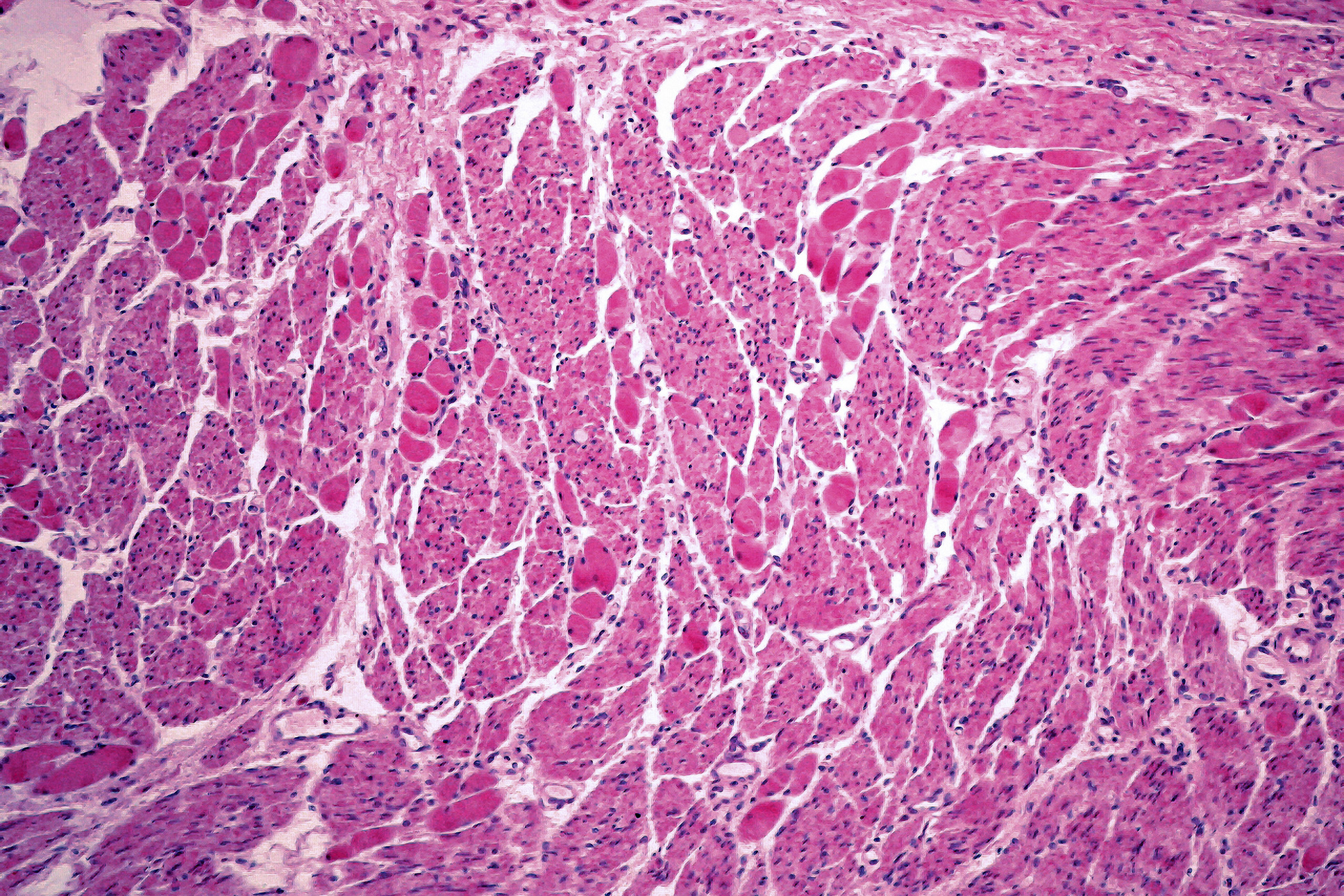
Rather than using naturally aged rats, these researchers used a rat model of IDD, which was induced by puncturing their vertebrae under anesthesia. Compared to a sham-operated group, the affected rats had considerable disorganization of the nucleus pulposus (NP) tissues that are vital for disc integrity along with significant fibrosis. Senior biomarkers, including p16 and p21, were upregulated in this group, and FGF21 was significantly downregulated.
This matched data from NP tissues derived from human donors. The more degenerated samples had increased fibrosis, reduced cellular counts, increased cellular senescence markers, and fewer of the proteoglycans that are necessary for proper function of spinal discs. While FGF21 was not found to be an independent risk factor, the researchers suggested this was due to the small sample size (n = 26). However, it was strongly correlated with both age and symptom severity.
Mechanisms Explored
The researchers then looked into administering FGF21 directly into an NP cell culture. After the cells were stressed using TBHP, a low dose of FGF21 (50 ng/mL) was found to have modest benefits for cellular senescence markers, and a higher dose (200 ng/mL) was found to have more substantial benefits, reducing p16, p21, p53, and the key senescence marker SA-β-gal. This treatment also restored natural antioxidant production and the creation of ATP, both of which are reduced in these cells under TBHP stress. The researchers found similar results when exposing the cells to the inflammatory factor IL-1β.
Findings and Observations
Compared to cells treated with TBHP alone, cells that were also treated with FGF21 were found to have substantial gene upregulations in autophagic maintenance processes, including mitophagy. In both humans with IDD and their rat model, the researchers noted that such autophagic markers were diminished.
A closer look at the treated NP cells found that mitochondria in the TBHP-only cells are swollen and perform minimal mitophagy, while FGF21 restores some of this capacity. The researchers hold that this process is specifically how FGF21 fights senescence in these cells. To confirm this finding, they administered a mitophagy inhibitor, Mdivi-1, alongside TBHP and FGF21 to NP cells. As expected, suppressing mitophagy nullified the effects of FGF21, as did knocking down the mitophagy-related gene Drp-1.
| Factor | Observation |
|---|---|
| FGF21 Treatment | Restored mitophagy and reduced senescence markers in NP cells. |
| Mitophagy Inhibition | Nullified the beneficial effects of FGF21 treatment. |
| SIRT1 Upregulation | Necessary for FGF21 to engage the PINK1-Parkin pathway. |
Further experiments found that the PINK1-Parkin pathway was also necessary for FGF21 to upregulate mitophagy; when either of these factors was interfered with, the effects of FGF21 on both mitophagy and senescence were severely attenuated. The researchers also discovered that the sirtuin SIRT1, which is downregulated in both human IDD and this rat model, was also upregulated by FGF21.
Another series of cellular experiments found the causal pathway: in these NP cells, FGF21 upregulates SIRT1, which then engages the PINK1-Parkin pathway to stimulate mitophagy and ameliorate cellular senescence.
Conclusions and Future Directions
With these results in hand, the researchers then returned to their rat model. While FGF21 did not fully ameliorate the symptoms of IDD, it substantially improved NP tissue morphology, partially restoring proteoglycans and restoring some of the discs’ size. Knocking down SIRT1 prevented these benefits from occurring.
These results are from an induced-IDD rat model, and naturally aged rats were not tested. However, the researchers have discovered a clear causal chain that occurs in NP cells. Further work will need to be done to determine if these results apply to naturally aged organisms and to human beings.
Literature
- Youm, Y. H., Gliniak, C., Zhang, Y., Dlugos, T., Scherer, P. E., & Dixit, V. D. (2025). Nature Aging, 5(4), 576-587.
- Ma, Y., Liu, Z., Deng, L., Du, J., Fan, Z., Ma, T., … & Zhang, Y. (2024). Journal of Translational Medicine, 22(1), 436.
We would like to ask you a small favor. We are a non-profit foundation and unlike some other organizations, we have no shareholders and no products to sell you. All our news and educational content is free for everyone to read, but it does mean that we rely on the help of people like you. Every contribution, no matter if it’s big or small, supports independent journalism and sustains our future.
About the Author
Josh Conway
Josh has been writing and editing Lifespan articles over the past decade and is responsible for the continued production of daily news content. He has a programming background and is a long-time supporter of anti-aging medicine.
© 2025 Lifespan Research Institute – ALL RIGHTS RESERVED





Discussion