
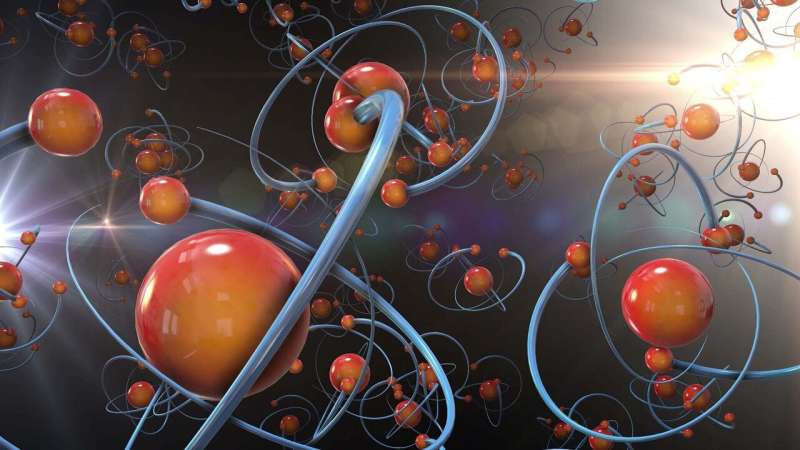
A recent study led by Professor Yossi Paltiel of the Hebrew University and Professor Ron Naaman of the Weizmann Institute explores the intriguing question of why life predominantly employs one chiral "hand" of molecules over the other. This enigma has perplexed scientists for over a century, and the new findings suggest a significant role for electron spin in this molecular preference.
Understanding Molecular Handedness
Molecules that are vital to biological processes exist in two enantiomeric forms, which are mirror images of each other. Despite their chemical similarities, only one of these forms, known as the chiral molecule, is typically engaged in biological functions. For example, amino acids almost exclusively take one form, while sugars adopt the opposite orientation. The phenomenon of selective utilization of enantiomers has been termed molecular chirality. It remains a central question in the fields of chemistry and biology.
Current theories have struggled to adequately explain the global predominance of one enantiomer over the other. The research presented in the Science Advances journal introduces a new angle by investigating the influence of electron spin on these molecular forms.
The Role of Electron Spin
The crux of the study indicates that the behavior of electrons in chiral molecules contributes to the asymmetry observed between the enantiomers. Key findings include:
- Asymmetrical Interaction: Electron spin interacts with molecular structures in a manner that is not perfectly symmetric, causing each enantiomer to react differently during dynamic interactions, despite being identical chemically.
- Dynamic Behavior Variation: The study identifies measurable differences in how each enantiomer behaves during dynamic processes, such as electron transport and interactions within magnetic environments.
- Significance of Spin Properties: These disparities in behavior demonstrate that mirror-image molecules do not always exhibit symmetrical responses, a break from previous assumptions that they would differ solely in sign.
Implications for Chemistry and Biology
The findings of this research suggest a new framework for understanding molecular chirality:
- One enantiomer may interact more efficiently with its environment due to the unique properties of electron spin, leading to a cumulative advantage over time.
- This study emphasizes that physical processes can have a profound impact on chemical reactions, potentially influencing the earliest stages of biological evolution.
Expanding Areas of Research
The implications of this work extend into several interdisciplinary fields. Future research may include:
| Research Area | Potential Applications |
|---|---|
| Chirality in Chemical Reactions | Understanding how chirality influences reaction dynamics and outcomes. |
| Material Design | Creating materials that utilize chiral properties and electron spin for specific functions. |
| Quantum Biology | Exploring quantum properties and their effects on biological processes. |
Conclusion
This groundbreaking study reshapes our comprehension of molecular chirality. By incorporating fundamental principles of physics, the research underscores the potential for new discoveries at the confluence of chemistry and biology. If electron spin indeed plays a pivotal role in determining molecular behavior, it prompts a reevaluation of how life's molecular building blocks have evolved and function.
For the complete article, refer to: Science Advances.
Publication Reference
Paltiel, Y., & Naaman, R. (2026). Dynamic Breaking of Mirror Symmetry in Spin-Dependent Electron Transport through Chiral Media Causes Enantiomeric Excesses. Science Advances.







Discussion