

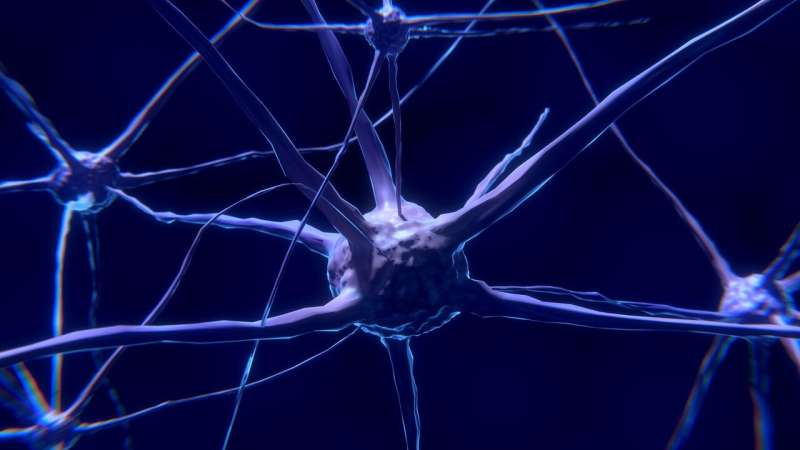
An international research team led by a University of Ottawa Faculty of Medicine investigator has unveiled intricate details regarding the activation of neuromuscular receptors at the neuromuscular junction. This specialized synapse, which connects motor neurons to skeletal muscle fibers, is crucial for muscle function and movement.
Discovery of the 'Primed' State
The team's findings, published in Science, introduce a novel understanding of how nerve signals are communicated with remarkable precision and timing. Dr. John Baenziger, the lead author of the study, emphasized the significance of the newly identified "primed" state in receptor functionality, stating that this intermediate structure is vital for effective neuromuscular communication.
Utilizing advanced single-molecule techniques, the researchers captured various atomic resolution structures of a neurotransmitter receptor along its activation pathway. They established a global alignment of three key states based on the Cα atoms in the M1-M3 helices from each subunit.
Key Findings
- Primed state identification: This newly discovered state is pivotal in the process of translating nerve signals into muscle activation.
- Asynchronous movement: Contrary to the long-held belief that protein receptors function through synchronous movements of their components, the study reveals that activation involves asynchronous transitions.
- Implications for drug design: Understanding this mechanism could lead to the development of more effective treatments for muscle-weakening conditions associated with genetic mutations.
Challenging Established Norms
Dr. Baenziger notes that for over fifty years, the scientific community has adhered to the concerted conformational transition theory, which suggests that all parts of a receptor move harmoniously during activation. This new research invalidates that assumption, presenting evidence that subunits within the receptor transition independently.
Such insights are critical for understanding how disease-causing mutations can affect neuromuscular communication. As Dr. Baenziger articulates, “This information will be critical to understanding how disease-causing mutations and different drugs modulate neuromuscular communication.”
Next Steps in Research
The research team, with Dr. Baenziger at the helm, aims to further investigate the influence of disease-causing mutations on the nicotinic acetylcholine receptor (nAChR) function. This protein is a key player in synaptic activity and is implicated in various neurological disorders.
The future of this research involves:
| Focus Area | Objective |
|---|---|
| Structural Analysis | Investigate structures of nAChR with disease-causing mutations. |
| Drug Interaction Studies | Evaluate how different drugs affect the primed state and overall receptor functionality. |
| Therapeutic Development | Use new structural insights as templates for designing improved therapeutics. |
Implications for Future Drug Design
This groundbreaking discovery holds the potential to transform drug design for various neuromuscular disorders, including congenital myasthenic syndrome. By targeting the specific mechanisms elucidated by these findings, researchers can develop advanced therapies aimed at improving synaptic communication and muscle function.
“We will want to use these new structures as templates to design better therapeutics.” – Dr. John Baenziger, Senior Author
Conclusion
In conclusion, the identification of the primed state within neuromuscular receptors marks a significant advancement in our understanding of synaptic communication. Dr. Baenziger's research not only challenges established paradigms but also opens new avenues for therapeutic intervention in neuromuscular disorders. The collaborative efforts of international researchers underscore the importance of interdisciplinary approaches in scientific discovery.
References
Thompson, M. J., et al. (2025). Asynchronous subunit transitions prime acetylcholine receptor activation. Science. DOI: 10.1126/science.adw1264
For further reading, visit the original article on Medical Xpress.









Discussion