

Loose Chromatin, Senescent Inflammation, and Cancer
By: Lifespan Research Institute
Date: August 28, 2025
This article sheds light on how the Senescence-Associated Secretory Phenotype (SASP) may be related to tumors.
Key Findings
- Senescent cells remodel their chromatin in a way that allows SASP-related compounds to be expressed more easily.
- KDM4 demethylates this chromatin, making it more accessible.
- Affecting KDM4 also appears to have benefits against cancer.
In Aging Cell, researchers have reported compelling connections between chromatin remodeling, cellular senescence, and cancer.
Chromatin and Gene Expression
The authors of this study begin by discussing two concepts that appear only loosely related: senescence and gene expression. Both of these concepts are well-known in aging research, but their direct interplay is rarely examined.
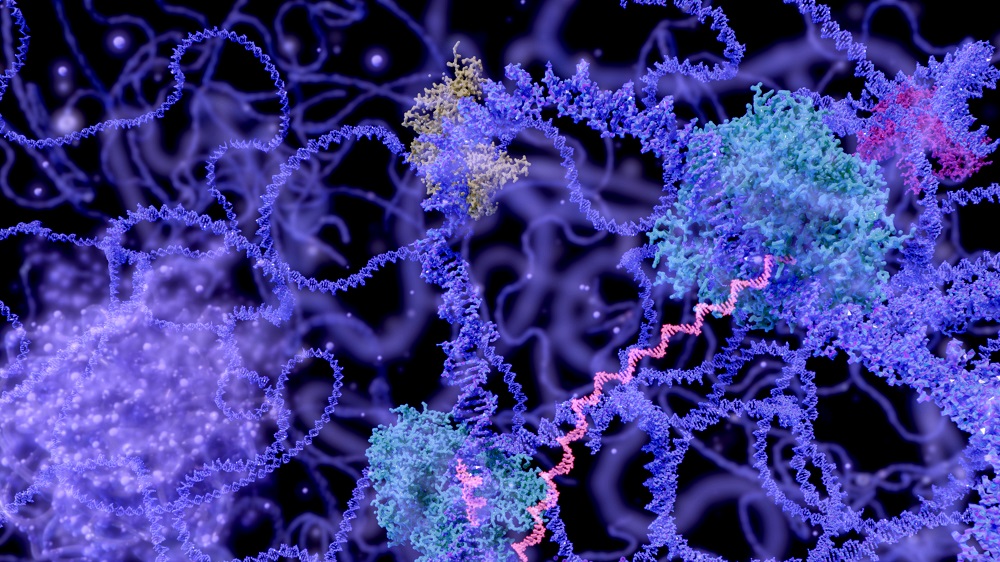
This research specifically centers on chromatin, the tightly wound DNA whose configuration determines what is and isn’t accessible for transcription. The researchers note that a decrease in histone methylation, which makes DNA more accessible, is associated with premature aging [1].
Specifically, the study focuses on lysine methylation, a common form of histone methylation reduced by the KDM4 subfamily of demethylases. KDM4 is heavily implicated in cancer treatment, and inhibitors of KDM4, alongside other epigenetic-related drugs, have been investigated in the treatment of breast cancer [2]. However, little prior work has examined its role in cellular senescence.
Loose Chromatin Allows the SASP to be Produced
Using bleomycin to induce senescence in human prostate stromal cells, which primarily consist of fibroblasts, the researchers compared their protein profiles to those of non-senescent cells. Of the 447 proteins quantified, the study found:
| Protein Expression | More Abundant | Less Abundant |
|---|---|---|
| Total Proteins | 87 | 29 |
The notable finding was that this protein expression was associated with methylation, specifically with diminished key histone signals (H3K9 and H3K36 methylation markers).
The relationship between histone methylation and cellular senescence was robust, with SASP expression directly correlated to decreased methylation, an increase in KDM4, and an increase in the DNA damage marker γH2AX. These specific changes were relevant only to cellular senescence and did not apply to cancers.
Notably, two variants, KDM4A and KDM4B, were found to drive SASP expression, rather than senescence itself. Silencing both variants through short hairpin RNA (shRNA) significantly decreased core SASP factors but did not affect cellular senescence progression. Additionally, maintaining histone methylation levels did not influence the progression of senescence but only the inflammatory SASP factor production.
Furthermore, blocking NF-κB, the master regulator of SASP, attenuated the SASP even while the KDM4A and KDM4B were promoted.
Relationship to Cancer
This research focused substantially on cancer rather than senescence. Notably, the researchers identified that upregulated KDM4A and B, along with decreased methylation, correlate with a reduced chance of disease-free survival. These compounds affected the cancer stroma—the noncancerous portions of a tumor that support its growth—more than they affected the cancer cells directly.
Utilizing a murine model with diabetes and immunodeficiency, the researchers investigated ML324 and the genotoxin MIT as potential cancer treatments. Two weeks post-injection with cancer, treatment groups received one or both compounds for eight weeks. The results mirrored the cellular study:
| Treatment Group | Tumor Size Change |
|---|---|
| ML324 + MIT | Significantly decreased |
| MIT Alone | No significant change |
This suggests that targeting KDM4 or possibly the SASP may be effective in prolonging survival and assisting individuals in combating cancer when used alongside more common treatments. However, significant further research is required to ascertain the applicability of this approach against prostate or other cancer types.
Of significant note is that this work is attributed to the late Judith Campisi as it was originally published in Nature Aging in 2021, with this Aging Cell article being submitted after addressing critical issues.
Support Independent Journalism
We would like to ask for your support. As a non-profit foundation, we have no shareholders and no products to sell. All our news and educational content is available free of charge, relying solely on contributions from individuals like you. Every donation, regardless of size, supports independent journalism and sustains our future.
Literature Cited
- Gruenbaum, Y., & Foisner, R. (2015). Lamins: nuclear intermediate filament proteins with fundamental functions in nuclear mechanics and genome regulation. Annual Review of Biochemistry, 84(1), 131-164.
- Metzger, E., et al. (2017). KDM4 inhibition targets breast cancer stem–like cells. Cancer Research, 77(21), 5900-5912.
Tags: Senescence, SASP, Cancer, KDM4
About the author:
Josh has been writing and editing Lifespan articles over the past decade and is responsible for the continued production of daily news content. He has a programming background and is a long-time supporter of anti-aging medicine.
Subscribe to Our Newsletter
Sign up to stay informed about the latest news and opportunities with the Lifespan Research Institute!
Email:
We respect your privacy. You can unsubscribe at any time.
Use of this website constitutes acceptance of the Terms and Conditions.
© 2025 Lifespan Research Institute – ALL RIGHTS RESERVED









Discussion