

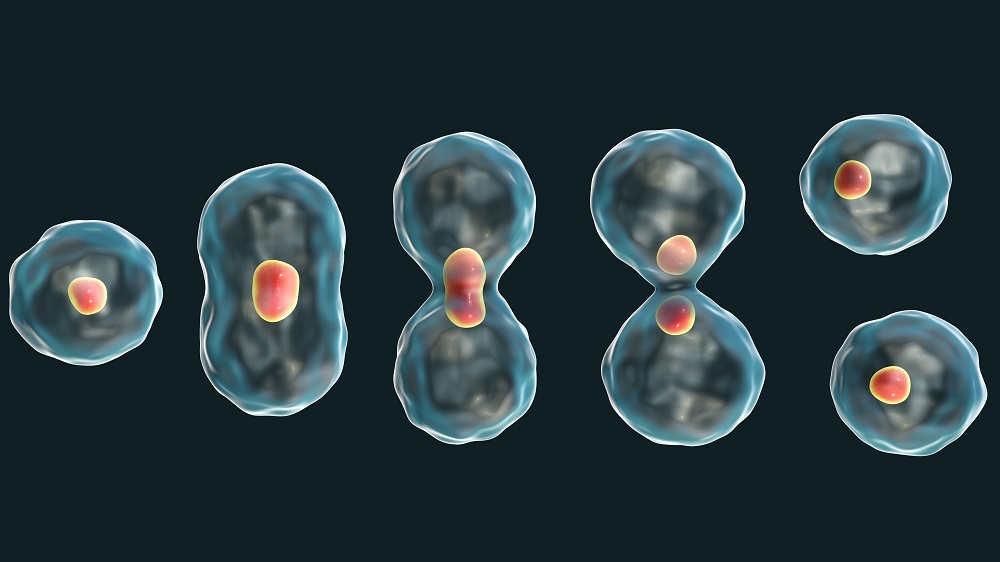
Recent advancements in the field of senotherapy have illuminated the complex interplay between the cell cycle stage and the efficacy of senotherapeutics. A pivotal study published in Aging investigates how the stage of cellular division at which senescence occurs influences the expression of senescence-associated secretory phenotype (SASP) factors and the subsequent response to senolytic treatments.
The Role of the Cell Cycle in Senescence
Senescent cells are characterized by a permanent state of cell cycle arrest and often exhibit distinct SASP profiles. However, this study suggests that not all senescent cells are alike; their differences hinge significantly upon the cell cycle phase during which they became senescent. The established understanding is that senescence can be induced through various stressors including DNA damage, often leading researchers to postulate that cellular context affects senescence characteristics.
Key Findings
The study highlights several important findings:
- Senescence Induction and Cellular Context: The expression of SASP factors is contingent upon the specific stage of the cell cycle at which cells experience senescence.
- Diversity of Senescent Cells: High-content imaging revealed functional differences among senescent cells, shedding light on the variability in their responses to treatments.
- Enhanced Sensitivity in G2 Phase Cells: Senescent cells arrested in the G2 phase showed increased sensitivity to senolytics like ABT263 compared to those arrested in the G1 phase.
Methodological Approach
The researchers employed high-content analysis, which provided a robust quantitative assessment of various senescence-associated markers post-induction through ionizing radiation (IR). This allowed them to observe the differential expression of these markers between primary human endothelial cells and fibroblasts:
| Cell Type | Senescence Markers Observed |
|---|---|
| Endothelial Cells | High levels of IL-6, IL-8, and p16INK4a. |
| Fibroblasts | Elevated p21 and SASP factors. |
Cell Phase and Senolytic Efficacy
The researchers segmented cells based upon whether they were enriched for G1 or G2 phase-arrested cells. After irradiation to induce senescence, they compared the secretion levels of IL-6, a prominent SASP component. The findings illustrated:
| Cell Cycle Phase | IL-6 Secretion (pg/ml) |
|---|---|
| G1 Phase | 120 pg/ml |
| G2 Phase | 250 pg/ml |
This data indicates that G2-arrested cells not only express more SASP factors but also have a heightened sensitivity to senotherapeutic interventions.
Implications for Personalized Senotherapy
The implications of these findings are profound for the future of personalized medicine. As researchers seek to tailor senolytic therapies to individual patients, understanding the variations in cellular responses based on cell cycle status will likely enhance treatment outcomes. The authors conclude:
“The differential impact of senotherapeutics observed in this study underscores the necessity for a nuanced approach in clinical settings, potentially leading to more effective treatments tailored to an individual patient’s senescence landscape.”
Future Directions
Further exploration into this topic is paramount. The authors suggest expanding research to include diverse cell types and multiple senescence-inducing mechanisms, as well as investigating the effectivity of senomorphics, which aim to reduce SASP factors and tissue dysfunction without eliminating senescent cells.
Ultimately, this study brings to light the intricate relationship between cell cycle dynamics and senescent cell biology, emphasizing a tailored therapeutic approach to combat age-related disorders.
References
[1] Neri, F., Zheng, S., Watson, M. A., Desprez, P. Y., Gerencser, A. A., Campisi, J., Wirtz, D., Wu, P. H., & Schilling, B. (2025). Senescent cell heterogeneity and responses to senolytic treatment are related to cell cycle status during senescence induction. Aging, 17(8), 2063–2078.
[2] Johnson, T. I., Minteer, C. J., Kottmann, D., Dunlop, C. R., Fernández, S. B. Q., Carnevalli, L. S., Wallez, Y., Lau, A., Richards, F. M., & Jodrell, D. I. (2021). Quantifying cell cycle-dependent drug sensitivities in cancer using a high throughput synchronisation and screening approach. EBioMedicine, 68, 103396.
For further insights into senotherapy and aging research, please visit Lifespan Research Institute.









Discussion