

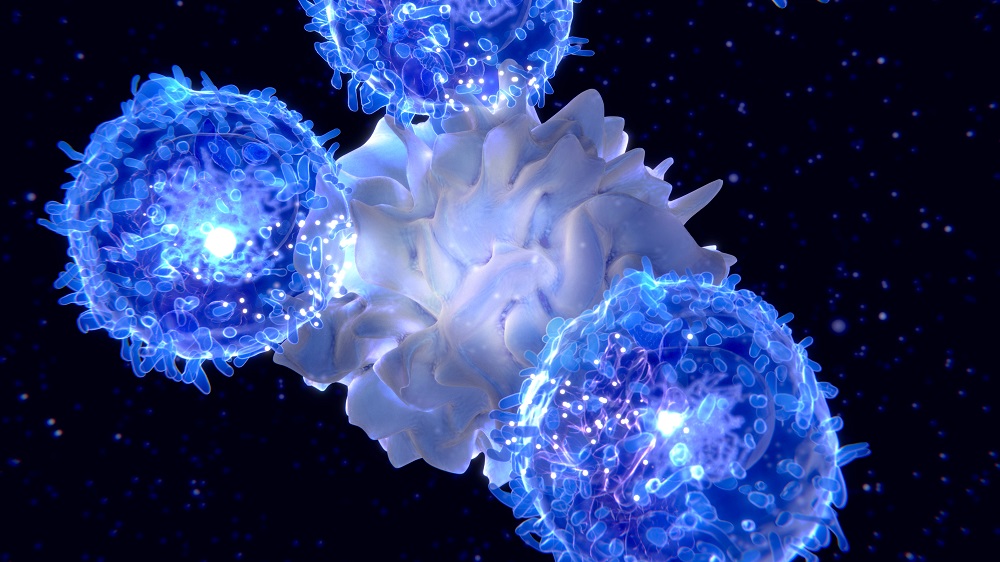
On March 31, 2026, researchers from Stanford University published groundbreaking findings in Nature Immunology regarding a novel approach to enhance the efficacy of cancer immunotherapy. By modifying immune cells to target cancer's unique metabolic signature, the researchers made significant advances in the infiltration and performance of natural killer (NK) and T cells against solid tumors.
Introduction to the Research
The ability of immune cells, particularly natural killer (NK) cells and cytotoxic T cells, to effectively target and eliminate tumors has been a pivotal area in cancer research. Despite advances like chimeric antigen receptors (CARs), these cells often struggle to penetrate solid tumors due to the hostile tumor microenvironment. This study delves into a solution by leveraging the metabolic byproducts of cancer cells.
The Targeting Problem
One of the critical challenges in immunotherapy is ensuring that immune cells are directed to the tumor site effectively. As noted in the study, the solid tumor environment presents both physical and biochemical barriers that complicate immune cell infiltration:
- Hostile Microenvironment: Tumors create a challenging environment that suppresses immune activity.
- Active Suppression: Cancer cells often inhibit signaling pathways utilized by immune cells to navigate towards them.
Addressing these issues led the researchers to explore how to enhance the migration of immune cells specifically into tumors.
Methods and Findings
Exploration of Metabolite-Sensing Receptors
The researchers initiated an unbiased gain-of-function screen targeting 256 candidate genes to identify receptors that could enhance the migration of NK cells into tumors. The results revealed eight receptors that significantly improved NK cell presence in tumors across various breast cancer models:
- GPR183
- GPR84
- GPR34
- GPR18
- LPAR2
- FPR3
- C5AR1
- CXCR2
Interestingly, the only chemokine receptor that made the list was CXCR2, highlighting the effective role GPRs play in targeting the unique metabolic byproducts of cancer cells. This conclusion was supported by both in vitro and in vivo experiments demonstrating that NK cells with modified GPR expressions could infiltrate tumor spheroids effectively.
GPR183 as a Conditional Switch
Among the receptors tested, GPR183 emerged as the most promising. The receptor displayed conditional activation dependent on the presence of specific ligands released by tumors, indicating its role as a conditional switch that alters NK cell behavior in the tumor context.
Improved Survival Rates in Mouse Models
The team went further to assess the real-world applications of their findings by conducting in vivo studies. Mice with triple-negative breast cancer xenografts received either control NK cells or NK-92 cells overexpressing GPR183:
| Group | Tumor Growth Delay | Survival Rate |
|---|---|---|
| Control NK Cells | No significant delay | 3 out of 10 complete responses |
| GPR183-overexpressing NK-92 Cells | Significant delay in growth | 7 out of 10 complete responses |
These results strongly suggest that arming immune cells with metabolite-sensing capabilities leads to better control of tumor growth and improved survival rates.
Conclusion and Future Directions
In a notable statement, Dr. Livnat Jerby, the senior author of the study, emphasized the importance of leveraging cancer metabolism to guide immune response. She remarked, “We found that when we equip immune cells with receptors that sense metabolites released by cancer cells, they can sense the tumor, migrate toward it, infiltrate it and control tumor growth.” This innovative approach hints at new directions for combining metabolic targeting with existing immunotherapeutic strategies.
References
1. Kim, Y. M., Tsai, M. K., Sun, C., Laveroni, O., Akana, R. V., Frombach, K., & Jerby, L. (2026). Modified immune cells target cancer’s metabolic signature. Nature Immunology, 1-14.
2. Marofi, F., Motavalli, R., Safonov, V. A., Thangavelu, L., Yumashev, A. V., Alexander, M., … & Khiavi, F. M. (2021). Advances in stem cell research & therapy, 12(1), 81.
3. Joyce, J. A., & Fearon, D. T. (2015). T cell exhaustion and tumor immune escape. Science, 348(6230), 74-80.
About the Author
Arkadi Mazin is a seasoned journalist and op-ed author with a passion for learning and exploration. His interests span politics, science, and philosophy, particularly focusing on the social aspects of longevity and life extension. Arkadi is committed to raising awareness about lifespan extension and its place in contemporary discourse.
We invite you to support independent journalism, especially as a non-profit foundation committed to providing educational content. Your contributions help sustain our future endeavors.





Discussion