

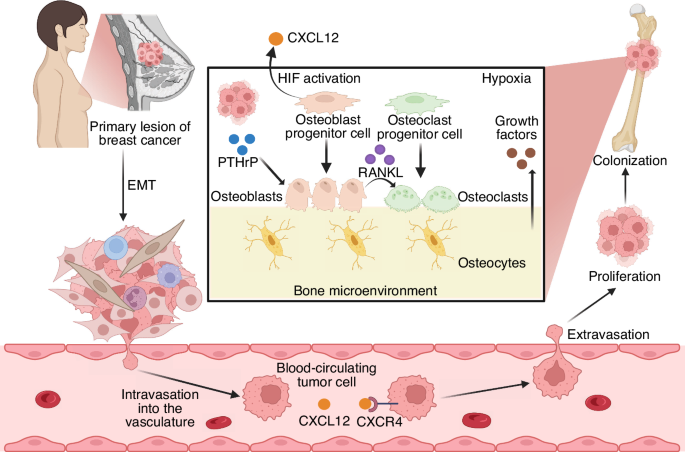
Recent groundbreaking research from Washington University Medicine has unveiled a significant discovery regarding breast tumors and their interaction with bone-derived cells, specifically cancer-associated fibroblasts (CAFs). This study indicates that these fibroblasts significantly enhance tumor growth and are pivotal in influencing the metastatic process.
Research Overview
The study, led by Professor Roberta Faccio at the Siteman Cancer Center, presents evidence that breast tumors actively recruit CAFs from the bone. Remarkably, the analysis indicated that up to 40% of the detected fibroblasts in tumor samples express Osterix, an osteoblast marker, highlighting the involvement of bone-derived cells in this process.
Methodology
The research utilized a combination of human tissue samples and mouse models to explore how these bone-derived cells are recruited. The noteworthy aspects of the methodology included:
- Tissue Sample Analysis: Human breast tumor samples were meticulously analyzed to quantify the presence of Osterix-expressing CAFs.
- Mouse Models: Animal models were employed to uncover the mechanisms by which breast tumors stimulate bone marrow cells, promoting their migration into the bloodstream and into the tumor environment.
Key Findings
Several key findings emerged from this study:
- Role of Bone-Derived CAFs: These cells have been identified as promoting tumor growth through the creation and reconfiguration of the tumor microenvironment.
- Potential Therapeutic Targets: Targeting Osterix and related molecules, such as MMP13, may inhibit tumor growth, signaling a path for new therapeutic strategies in breast cancer treatment.
- Genetic Signature Correlation: A genetic signature found in bone-derived CAFs has been correlated with poorer survival outcomes for breast cancer patients.
Limitations
Despite the compelling nature of the study, certain limitations must be acknowledged:
- The reliance on mouse models may not fully replicate the intricacies of the human tumor microenvironment.
- The multifaceted characteristics of cancer progression present challenges in isolating distinct causes and effects of CAF recruitment.
Implications for Future Research
The findings emphasize the crucial need for more focused research aimed at targeting CAFs as a method to develop innovative breast cancer therapies. Such efforts could significantly enhance patient outcomes and recovery strategies.
Source Citations
Additional academic sources that provide further insights into the role of CAFs in breast cancer include:
| Title | Source | Description |
|---|---|---|
| Breast cancers recruit bone cells to increase tumor growth - The Source - WashU | Washington University | Research from WashU Medicine shows that bone-derived cells are recruited to support breast tumor growth. |
| Breast Cancer-Associated Fibroblasts: Where We Are and Where We Need to Go | MDPI | Overview of cancer-associated fibroblasts in the context of breast cancer research. |
| Cancer associated fibroblasts: An essential role in the tumor microenvironment | NCBI | Study highlighting the importance of CAFs in tumor progression and therapy resistance. |
This ongoing research into CAFs and their interactions within the tumor microenvironment holds promise for the future of breast cancer treatment, potentially leading to groundbreaking advancements in patient care.




Discussion