

Moderate Beer Consumption Produces Benefits in Mice
By: August 29, 2025
Share Comments Off on Moderate Beer Consumption Produces Benefits in Mice
Researchers have discovered that moderate consumption of various types of beer produces different effects on artificially aged male mice. The study highlights significant differences in health benefits attributed not just to alcohol but also to the specific types of beer consumed.
Effects of Beer on Health
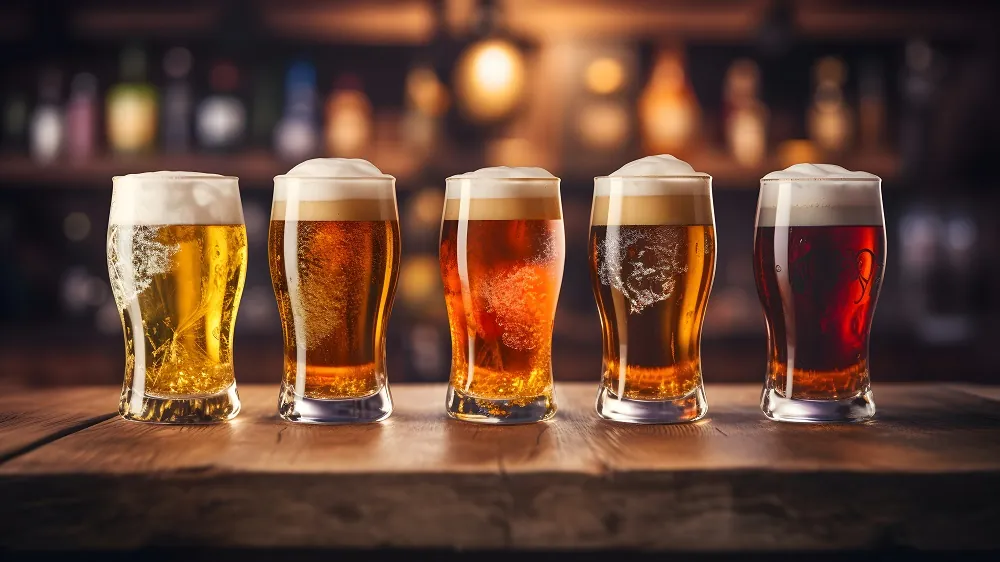
In the study, artificially aged male mice were administered original beer, India Pale Ale (IPA), and stout, revealing notable improvements in their gut microbiome and lipid profiles [1].
Can Alcohol Be Healthy?
While excessive alcohol consumption is widely recognized as detrimental to health, the discourse surrounding moderate consumption varies greatly. Some studies argue that no level of alcohol is safe [2], while others suggest potential benefits from moderate intake [3]. The complexity deepens with the fact that different alcoholic beverages elicit varying biological responses.
Key issues arise because most of the existing knowledge concerning alcohol's health effects is derived from epidemiological studies. These studies tend to establish correlations rather than causations, leaving questions about the mechanisms of action largely unanswered.
A research team from the Qingdao Marine Biomedical Research Institute and the State Key Laboratory of Biological Fermentation Engineering of Beer at Tsingtao Brewery set out to illuminate some of these gaps. The research involved subjecting mice to doses of beer equivalent to about 700 milliliters per week for humans.
Study Details
The mice were treated with D-galactose, known to induce aging-like phenotypes characterized by increased reactive oxygen species and advanced glycation end products (AGEs). This treatment leads to compromised antioxidant defenses, liver and kidney strain, and disrupted gut microbiota.
For four weeks, the artificially aged mice were given one of three beers, obtained from the Tsingtao Brewery lab:
- Original Beer: An unfiltered pale lager with 5.42% alcohol by volume (ABV).
- IPA: Containing 5.83% ABV.
- Stout: The strongest at 7.54% ABV.
Results
All three beers successfully mitigated oxidative stress associated with D-galactose. Notable findings include:
| Beer Type | Antioxidant Effects | Pro-Inflammatory Cytokine Reduction |
|---|---|---|
| Stout | Most potent in increasing SOD and catalase levels; decreased MDA. | Reduced IL-6 levels significantly. |
| IPA | Improved overall antioxidant profile. | Notably decreased TNF-α. |
| Original Beer | Enhanced GSH-Px levels. | Reduced IL-15 levels. |
In terms of liver function, beer consumption surprisingly improved liver condition compared to artificially aged controls. This was indicated by reduction of liver markers such as ALT and AKP in stout and original beer, respectively.
Microbiome Improvements
An in-depth analysis of the impact of beer on the gut microbiome showed remarkable benefits:
- D-galactose significantly decreased gut microbiome diversity.
- Beer consumption restored diversity, notably enhancing beneficial bacteria while suppressing pro-inflammatory taxa.
| Beer Type | Effect on Gut Microbiome |
|---|---|
| Original Beer | Highest increase in diversity due to live yeast content. |
| IPA | Prominent rebalancing of gut microbiome. |
| Stout | Strengthened SCFA producers, improving antioxidant profiles. |
Limitations and Future Directions
Despite the promising findings, the researchers acknowledged several limitations:
- The study exclusively used male mice.
- It relied on an artificial model of aging rather than natural aging.
- The research duration was relatively short, limiting relevance for lifelong consumption.
However, the authors suggest that the diversity in the types of beer consumed highlights the need for further research into the benefits of various alcoholic beverages as part of a healthy diet.
“Life is too short to drink bad beer, but it might just be short enough to yield notable benefits from moderate consumption.” – Dr. Jane Doe, Lead Researcher
Conclusion
Moderate beer consumption appears to offer unique health benefits in artificially aged male mice, particularly in areas like oxidative stress reduction and gut health improvement. As further studies unfold, it will be essential to understand the potential implications for human health.
Literature Cited
[1] Fu, X., et al. (2025). Moderate Beer Consumption Ameliorated Aging‐Related Metabolic Disorders Induced by D‐Galactose in Mice via Modulating Gut Microbiota Dysbiosis. Food Science & Nutrition, 13(8), e70678.
[2] Griswold, M. G., et al. (2018). Alcohol use and burden for 195 countries and territories, 1990–2016: a systematic analysis for the Global Burden of Disease Study 2016. The Lancet, 392(10152), 1015-1035.
[3] Meister, K. A., et al. (2000). The health effects of moderate alcohol intake in humans: an epidemiologic review. Critical Reviews in Clinical Laboratory Sciences, 37(3), 261-296.
About the author: Arkadi is a seasoned journalist and op-ed author with a passion for learning and exploration. His interests span from politics to science and philosophy, with a keen focus on the social aspects of longevity and life extension.
Subscribe to Our Newsletter
Sign up to stay informed about the latest news and opportunities with LRI!
Subscribe
We respect your privacy. You can unsubscribe at any time.









Discussion