

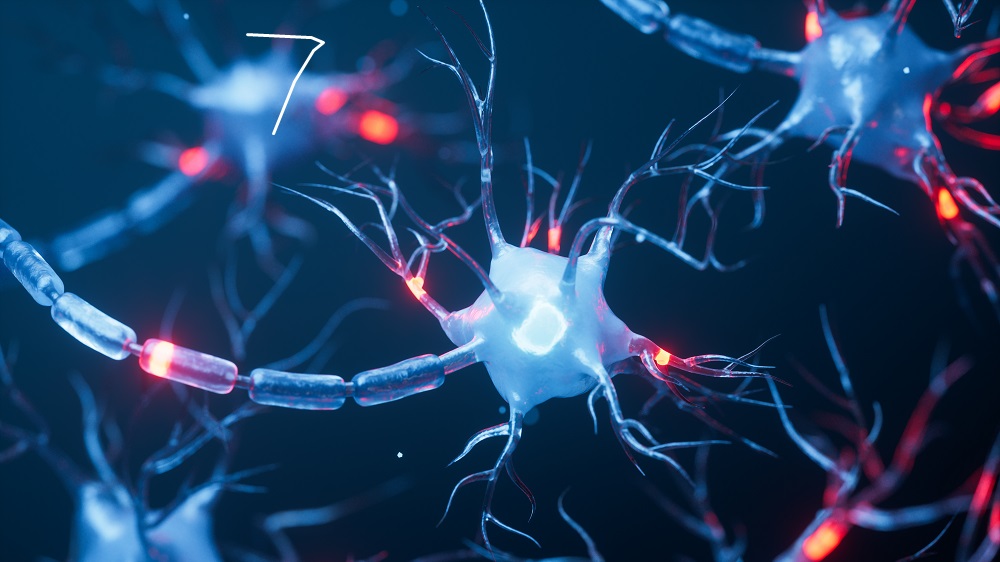
The recent study highlights the impact of the APOE4 allele on neuronal excitability and its implications for Alzheimer’s disease, a debilitating neurodegenerative disorder that often begins silently in individuals before symptoms manifest. Published on April 7, 2026, the findings underscore that significant changes in neuronal properties occur early in life among individuals carrying the APOE4 allele, which is strongly linked to increased risk for Alzheimer’s disease.
Introduction
Alzheimer's disease progresses insidiously over many years, with the ε4 variant of the apolipoprotein (APOE) gene recognized as the most significant genetic risk factor for its late-onset form. Possessing one copy of the APOE4 allele increases Alzheimer's risk by nearly threefold, while two copies enhance this risk approximately twelve-fold. The variations in neuron excitability seen in carriers of APOE4 indicate a potential early marker for Alzheimer's pathology, resembling conditions observed in epilepsy and suggesting mechanisms related to accelerated aging.
Hyperexcitability Before Symptoms Arise
Research conducted by the Gladstone Institutes, and published in Nature Aging, emphasized that the hippocampus—the brain’s center for learning and memory—exhibits over-activity long before clinical symptoms of Alzheimer’s disease emerge. This hyperexcitability is characterized by intermittent bursts of neuronal firing, known as interictal spikes (IIS), a phenomenon frequently documented in early Alzheimer’s disease stages.
Study Design and Findings
To examine the effects of APOE4 on neuronal excitability, the study involved the analysis of local field potential (LFP) recordings from genetically modified mice possessing either the APOE4 (E4-KI) or APOE3 (E3-KI) alleles. Data was collected at two significant life stages: young (5-10 months) and aged (12-18 months) mice. The results were illuminating:
- Younger E4-KI mice exhibited a marked increase in IIS rates in specific regions of the hippocampus (CA3 and dentate gyrus), in comparison to age-matched E3-KI mice.
- Aged E3-KI mice displayed some elevation in IIS rates, suggesting that certain Alzheimer’s traits may parallel accelerated aging.
- Notably, early IIS rates among E4-KI mice correlated with poor cognitive performance on the Morris water maze test as they aged, highlighting the predictive nature of early hyperexcitability for future cognitive decline.
Cellular and Molecular Mechanisms
The study pursued further insights into the cellular mechanisms that dictate the hyperexcitability in E4-KI mice. Using whole-cell patch-clamp recordings, researchers assessed single neuronal electrical properties, revealing that CA3 pyramidal neurons in young E4-KI mice were hyperexcitable and smaller relative to their E3-KI counterparts. By old age, E3-KI CA3 neurons similarly exhibited increased excitability and size reduction, pointing towards a shared aging trajectory, albeit divergent initially.
| Group | Characteristic | Observation |
|---|---|---|
| Young E4-KI Mice | Interictal Spike Rates | Elevated |
| Old E3-KI Mice | Interictal Spike Rates | Increased |
| Neuronal Size | CA3 Pyramidal Neurons | Smaller in E4-KI |
Target Identification and Potential Interventions
A critical breakthrough arose when researchers uncovered the differential expression of the Nell2 gene between the E4-KI and E3-KI groups. Utilizing CRISPR interference to reduce Nell2 expression revealed an alleviation in neuronal hyperexcitability and an increase in cell size. This finding underscores the potential for targeting Nell2 as an intervention strategy for mitigating Alzheimer’s symptoms:
“This study is a significant advancement in Alzheimer’s research; it indicates that the damage isn't irreversible and that there might be a time frame for intervention even after the onset of neurodegeneration.” – Yadong Huang, MD, Ph.D.
Conclusion and Future Directions
The insights gained from this research elucidate the underlying neuronal alterations associated with the APOE4 allele prior to the onset of Alzheimer’s clinical symptoms. Identifying hyperexcitability as an early biological marker offers a new avenue for potential therapeutic targets, such as Nell2. Ongoing studies will be necessary to evaluate how manipulating these molecular pathways can effectively reduce hyperexcitability and improve cognitive outcomes in APOE4 carriers.
References
- [1] Tabuena, D. R., et al. (2026). Nature Aging, 1-19.
- [2] Putcha, D., et al. (2011). *Journal of Neuroscience*, 31(48), 17680-17688.
- [3] Vossel, K. A., et al. (2017). *The Lancet Neurology*, 16(4), 311-322.
- [4] Briellmann, R. S., et al. (2000). *Neurology*, 55(3), 435-437.
We appreciate your support towards our nonprofit mission in independent journalism. Every contribution, irrespective of size, is instrumental in promoting informed discussions on vital scientific developments.





Discussion