

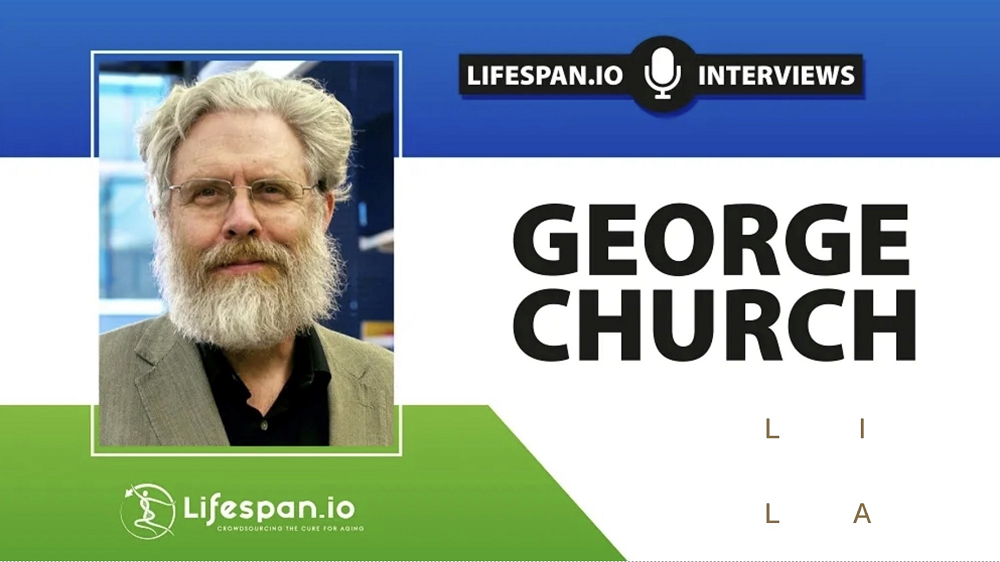
In an enlightening interview conducted on November 21, 2025, by journalist Arkadi Mazin, George Church, a prominent figure in the realm of geroscience and Harvard professor, discussed his groundbreaking venture alongside Lila Sciences. Church, a veteran in the entrepreneurship landscape, has co-founded numerous biotech firms, but Lila Sciences stands out as a focal point of his current endeavors.
Lila Sciences: A New Paradigm in Scientific Research
Lila Sciences, founded in 2023, aims to craft what they describe as “Scientific Superintelligence.” This ambitious initiative involves the integration of various artificial intelligence (AI) models with advanced robotic laboratories designed to rapidly test hypotheses generated by AI and subsequently feed new data into iterative models.
Having successfully raised approximately $550 million with a valuation reaching $1.3 billion, the company already boasts several promising discoveries. Their innovative approach heralds a potential revolution in scientific methodologies.
The Unique Commitment of George Church
In a departure from his typical advisory roles in other companies, Church expressed an unprecedented commitment to Lila Sciences, stating:
“Lila is special in the sense that I’ve been working on computational biology and AI for many years. I keep looking around for the big players and who’s got the most interesting story.”
This focus on developing proprietary data over scraping existing information illustrates a significant shift in how scientific research can be conducted. Church highlighted the importance of creating new empirical data rather than relying on existing and often poorly assembled datasets.
Responsibility in Achieving Scientific Superintelligence
During the interview, Church addressed the concept of responsibility in AI development, citing the need for caution when empowering any form of intelligence—especially one that could be construed as superintelligent. He remarked:
- Focus Narrowly: Limit the scope of AI applications to avoid existential risks.
- Promote Transparency: Ensure that AI systems can explain their decisions to humans.
- Avoid Unfettered Power: Prevent granting AI total discretion without guarding principles.
Interpretability vs. Power: A Delicate Balance
Church expressed a preference for interpretability over sheer power in AI models, stating:
"Scientists and engineers... want to know the mechanisms."
This inclination towards transparency is aligned with a fundamental belief that interpretability enhances the safety and usability of AI technologies in scientific contexts.
A Model for Scientific AI
The dual-model approach of Lila Sciences involves:
- Meta-Models: For obtaining proprietary empirical data through new high-throughput methodologies.
- Language Models: Interfacing with users in a natural language processing manner to fine-tune scientific inquiry.
Church mentioned the significance of empirical evidence, stating, “We can make large libraries for certain fields of science…” This capability allows for robust and extensive testing, contributing to a deeper understanding and rapid discoveries in various scientific domains.
Bottlenecks in Scientific Progress
Addressing potential bottlenecks, Church cited several challenges, including:
| Bottleneck | Impact | Potential Solutions |
|---|---|---|
| FDA Approval Processes | Can delay innovative therapies | Streamlined processes, leveraging new technologies |
| Funding Challenges | Limits research feasibility | Emergence of AI-informed cost-cutting strategies |
| Energy Consumption of GPUs | Affects computational efficiency | Investing in sustainable energy solutions |
These bottlenecks, which historically constrained the advancement of therapeutics, are subjects of ongoing investigation and innovation.
AI's Future in Biology
As the conversation progressed, Church shared a visionary outlook on the role of AI in biology for the next decade or two. Key insights included:
- A move towards rapid clinical trials with the potential to conduct them within less than a year.
- Use of AI for creating tailored treatments and understanding the complexities of aging at a genetic and cellular level.
- The integration of biotechnology with AI will expedite advancements in addressing diseases and enhancing longevity.
A Call to Action
Church concluded by emphasizing the exciting opportunities presented by AI and biotechnology and the ethical imperatives associated with their development. He believes that a synergistic approach combining human intellect and AI capabilities will lead to unparalleled breakthroughs in science.
This transformative journey, guided by leaders like George Church at Lila Sciences, poses profound implications not only for scientific advancement but also for the future of human aging and health.
Further Reading
To learn more about the implications of AI in biotechnology, consider exploring the following resources:
About the Author
Arkadi Mazin is a seasoned journalist and op-ed author passionate about politics, science, and philosophy. With a background in economics and international relations, he focuses on the societal implications of longevity and life extension.
This interview sheds light on the emerging landscape of AI-driven research and serves as a clarion call for an informed approach to harnessing these innovative technologies responsibly and ethically.









Discussion