


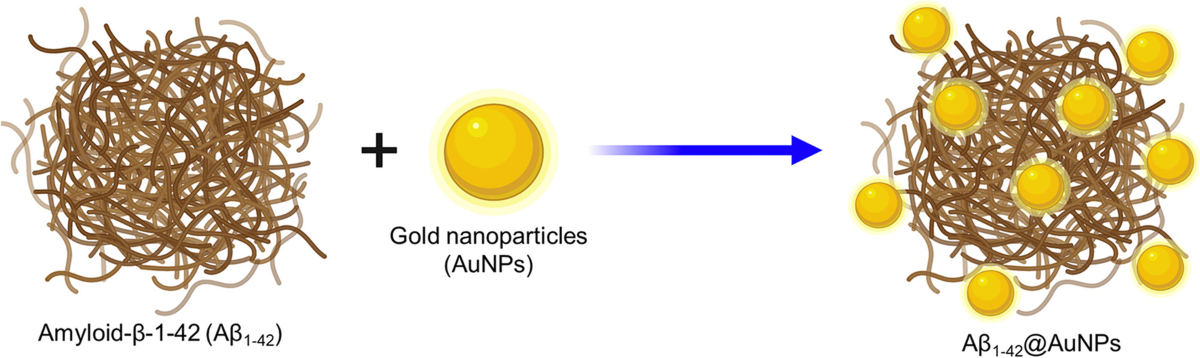
A recent study from Rockefeller University explores the interactions between amyloid beta (Aβ) and fibrinogen, shedding light on their combined impact on neurons in the context of Alzheimer’s disease. The findings suggest that while high concentrations of these proteins are detrimental to neuronal health individually, their interaction at lower concentrations may precipitate significant cellular damage.
Introduction to Alzheimer's Disease Markers
Alzheimer's disease (AD) is characterized by the accumulation of amyloid beta (Aβ) and tau proteins, both of which are crucial players in the pathology of the disease. However, recent research indicates the necessity of investigating the interactions between Aβ and other proteins, specifically fibrinogen, a protein involved in blood clotting.
The Detrimental Duo: Aβ and Fibrinogen
Fibrinogen, typically absent in brain tissue, leaks through the blood-brain barrier (BBB) as it deteriorates, a common feature of Alzheimer’s. The researchers aimed to determine how the combination of Aβ42, a particularly harmful form of amyloid peptide, and fibrinogen influences synaptic health and BBB integrity.
Experimental Methodology
The researchers employed organotypic hippocampal slice cultures (OHCs) from mice, which are 400-µm thick slices maintaining local circuitry. They treated these slices with varying concentrations of Aβ42 and fibrinogen, both individually and in complexes, to measure the levels of two key synaptic proteins: SYP (Synaptophysin) and PSD-95 (Post-synaptic density protein-95).
Results and Findings
The results showed that:
- Individual Treatments: Low doses of Aβ42 (150 nM) and fibrinogen (50 nM) did not significantly alter the levels of SYP and PSD-95.
- High Aβ42 Doses: A high concentration of Aβ42 (500 nM) resulted in decreased levels of both proteins, confirming their established role in synaptic damage.
- Complex Interaction: The combination of low doses (150 nM Aβ42 + 50 nM fibrinogen) led to notable declines in protein levels, equivalent to those seen with the high Aβ42 dose.
Erin Norris, a research associate professor involved in the study, stated, “It takes a larger amount of Aβ or fibrinogen alone to cause serious damage in the Alzheimer’s brain. But when the two complex together, you only need very small amounts of each to cause damage.”
Investigating the Mechanisms of Damage
The researchers hypothesized that the complexes formed by Aβ42 and fibrinogen could directly contribute to neuronal damage. To test this hypothesis, they used a blocking molecule to inhibit fibrinogen's binding site during their experiments, which successfully prevented synaptic loss. Additionally, in in vivo experiments involving mice, those treated with pre-formed complexes displayed reduced levels of SYP and PSD-95.
Significance of the Findings
Furthermore, only the Aβ42/fibrinogen complexes led to an increase in phosphorylated tau181 (p-tau181), a critical early biomarker for Alzheimer's, and elevated levels of microglial activation markers CD68 and GFAP. This evidence underscores the harmful role of the Aβ-fibrinogen complex in exacerbating Alzheimer's pathology.
Implications for Future Research
The study highlights a potential vicious cycle: the binding of fibrinogen with Aβ not only compromises synaptic function but also damages the BBB, allowing blood proteins to infiltrate brain tissue further, which ultimately exacerbates neurotoxicity. Below is a summary table detailing the observed effects:
| Effect | Observation |
|---|---|
| Synaptic Protein Levels | Decreased SYP and PSD-95 levels with complexes |
| p-Tau181 Levels | Increased levels only in the presence of complexes |
| Microglial Activation | Enhanced activation observed with complexes |
| Blood-Brain Barrier Integrity | Leakage observed with complex formation |
According to the researchers, these findings could pave the way for innovative therapeutic strategies targeting Aβ-fibrinogen complexes to mitigate the pathological consequences of Alzheimer's disease.
Concluding Remarks
This study suggests the intricate relationship between vascular dysfunction and Alzheimer's pathogenesis. It emphasizes the importance of early intervention before significant Aβ accumulation occurs, proposing further investigation into the role of fibrinogen in this complex interplay.
As highlighted by Elisa Nicoloso Simões-Pires, “It’s not a simple disease. A lot of other factors can induce neurotoxicity, and we certainly do not propose that inhibiting this complex formation would cure AD.” The research advocates for a comprehensive approach that addresses the multifaceted nature of Alzheimer's disease.
Literature Cited
- Simões‐Pires, E. N., Torrente, D., Singh, P., Strickland, S., & Norris, E. H. (2025). Synergistic effects of the Aβ/fibrinogen complex on synaptotoxicity, neuroinflammation, and blood–brain barrier damage in Alzheimer’s disease models. Alzheimer’s & Dementia, 21(5), e70119.
- Sweeney, M. D., Sagare, A. P., & Zlokovic, B. V. (2018). Blood–brain barrier breakdown in Alzheimer disease and other neurodegenerative disorders. Nature Reviews Neurology, 14(3), 133-150.
- Singh, P. K., Simões-Pires, E. N., Chen, Z. L., Torrente, D., Calvano, M., Sharma, A., & Norris, E. H. (2024). Lecanemab blocks the effects of the Aβ/fibrinogen complex on blood clots and synapse toxicity in organotypic culture. Proceedings of the National Academy of Sciences, 121(17), e2314450121.
Author: Arkadi Mazin, a seasoned journalist keen on exploring scientific advancements and their implications on longevity and life extension.





Discussion